

Booking a live engraver for your event is one of the most impactful decisions you can make for guest experience, but it is also one of the most misunderstood from a logistics perspective.
Most clients who inquire about live engraving have seen a video online, attended a luxury retail event, or heard about it from a planner. What they rarely know upfront is exactly what a professional package includes, what they need to provide, and how to set up the activation for maximum impact.
This guide covers all of it, from the first conversation to the final piece produced on event day.
What a Professional Live Engraving Package Covers
A professional live engraving package is not simply paying an artist to show up and write on things.
It is a fully managed experiential service that includes pre-event planning, on-site production, and post-event follow-up, all of which require the artist’s time and expertise.
Pre-Event Consultation
Every professional engagement starts with a consultation before any commitment is made.
During this session, the artist reviews the event context, the items to be engraved, the text or design per piece, the guest flow, and any brand or aesthetic guidelines that apply.
This consultation is where alignment happens. The artist needs to confirm that the requested work is achievable with the proposed materials, timeline, and guest volume, and the client needs to confirm that the artist’s style and capability match the event’s aesthetic.
Design Preparation and Sample Production
For events with a consistent engraving format, such as a brand activation where every guest receives the same item with a personalized name, the artist typically produces a design sample before the event for client approval.
This ensures that the script style, sizing, layout, and material finish all meet expectations before the artist commits to producing the same format 50 to 200 times on event day.
This design approval stage is critical and is one of the areas where cutting corners leads to the most expensive last-minute problems.
What the Artist Brings to Your Event
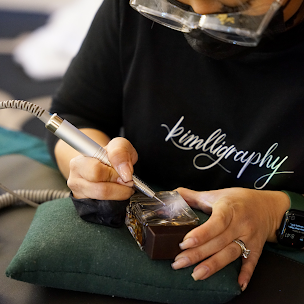
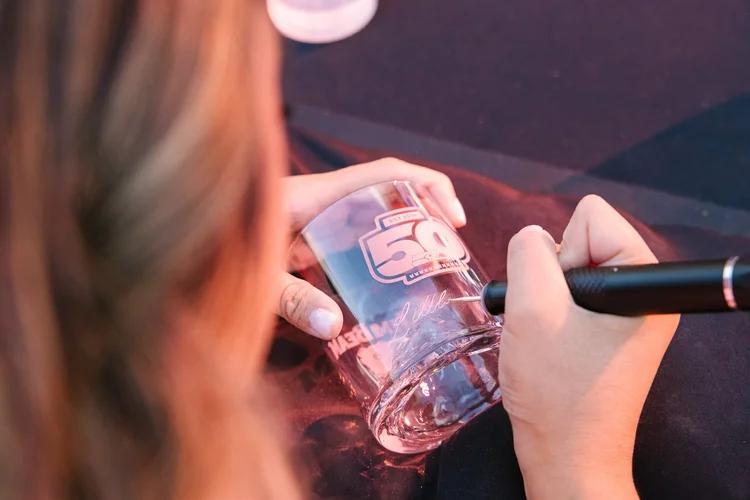
A professional live engraver arrives with a complete, self-contained toolkit.
Tools, Inks, and Surface Preparation Materials
Gravers, nibs, styluses, rotary tools, ink, gouache, metallic pigments, fixatives, blotting materials, and surface preparation products are all part of what a professional artist brings and manages independently.
The client does not need to source any of these materials unless a very specific brand-provided material has been requested for the activation.
Portable Setup and Display
A professional live engraving setup includes a worktable, adequate lighting (typically a dedicated lamp for precision work), display materials for presenting the finished pieces attractively, and any branded elements that have been agreed upon as part of the package.
For luxury brand activations, the artist’s setup is designed to be as visually impressive as the work they produce, because guests interact with the setup before they interact with the finished piece.
Quality Control Process
A professional artist performs a quality check on every piece before it is handed to the guest.
This includes checking for consistent depth, clean edges, correct spelling, and finish quality on the specific surface being used.
This quality management process is invisible to guests but is one of the key differentiators between a professional live engraving package and an amateur booking.
What the Client Is Responsible For
Understanding your responsibilities as the client is essential for a smooth event day.
Supplying the Items to Be Engraved
In most cases, the client supplies the physical items that will be engraved at the event.
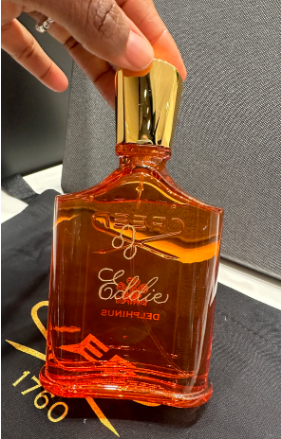
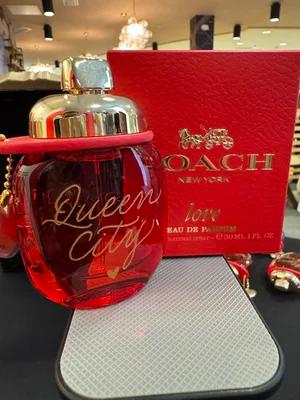
This might be bottles of wine or spirits, crystal glasses, leather notebooks, perfume bottles, or product packaging, depending on the nature of the activation.
The artist should receive samples of these items in advance for testing, to confirm that the engraving technique planned for the event is compatible with the specific material and finish.
The advice on how to choose the best perfumes for engraving based on bottle surface quality is a helpful example of this kind of pre-event material testing consideration.
Providing Guest Information in Advance (Where Possible)
For seated events with a fixed guest list, providing names or text in advance allows the artist to pre-plan the layout and script for each piece, dramatically increasing production speed and consistency on event day.
For walk-up activations where guest personalization is spontaneous, this is not possible, but the artist should be briefed on the expected guest flow rate so the activation is set up to manage demand without creating frustrating wait times.
Logistics and Setup Access
The client is responsible for ensuring the artist has access to the venue at least 60 to 90 minutes before the event starts for setup.
Adequate lighting, a flat stable work surface, and a clear guest flow path to and from the engraving station are all setup requirements that the venue and client need to confirm in advance.
Reviewing the complete checklist for preparing for a brand activation with a live artist before your event is one of the most practical things an event manager can do to prevent day-of complications.
Common Add-Ons in Live Engraving Packages
Beyond the core service, professional live engraving packages often include optional add-ons that enhance the guest experience and production output.
Gold Gouache and Metallic Ink Applications
Standard engraving produces a clean cut or mark in the material’s natural color.
Adding gold gouache, silver pigment, or metallic paint to the engraved lines creates a dramatically different visual effect that is particularly effective on dark surfaces like black leather or dark glass.
This add-on typically increases the per-piece production time by 30 to 50 percent and is reflected in the package pricing accordingly.
Custom Artwork and Illustrated Elements
Some activations request not just text but small illustrated elements alongside the personalization: a small floral motif, a brand icon, or a decorative border.
These custom artwork elements require advance preparation and are typically scoped as a specific add-on to the base engraving package.
Live Video Content Support
For brand activations where content capture is part of the production, some artists work with a dedicated videographer or photographer to capture the live engraving process for social media and marketing use.
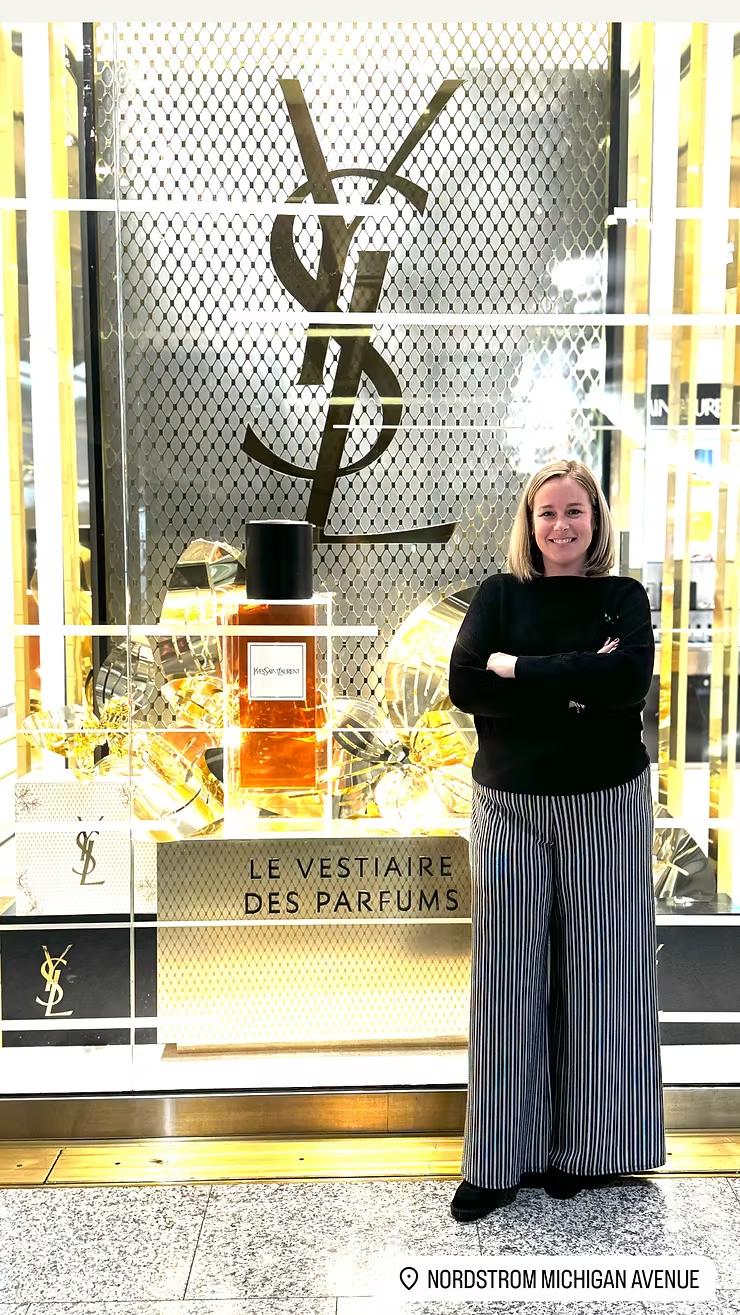
Carla Schall’s work at on-site luxury brand activations has been documented in this way, producing content that extends the brand story well beyond the event itself.
Guest Flow Planning for Live Engraving Activations
One of the most overlooked elements of live engraving event planning is the guest flow design.
A professional artist can typically engrave 10 to 15 items per hour depending on the complexity and the surface. At a 100-person event, this means the artist can serve every guest in seven to ten hours.
But live events are not linear. Guests tend to arrive in waves, cluster around interesting activations, and create spontaneous queues.
Managing Wait Times and Guest Engagement
A well-planned activation addresses wait time proactively.
Display the finished pieces attractively so that guests approaching the station have something to engage with while they wait.
Brief the event staff to manage the queue and set expectations with guests about wait times.
For corporate events where the artist is the entertainment as much as the service provider, the queue is often part of the experience rather than a problem to be solved.
Calculating the Right Duration for Your Guest Volume
A 200-person event where every guest is expected to receive an engraved piece requires a minimum of 13 to 20 artist hours of production time.
That is either a very long event day for one artist, or a case where multiple artist stations may be appropriate.
Your event planning brief should include a realistic expectation of what percentage of guests will participate in the activation, which is typically 60 to 80 percent at well-promoted activations.
The detailed breakdown of live event engraving costs for Florida events includes guidance on how to scope the right package duration for different event sizes.
What Happens After the Event
For studio work that is produced around a live event, such as custom engraved gifts that are distributed at the event but produced in advance, a professional package includes delivery or shipping of the completed items.
For purely live on-site engraving, the post-event deliverables are typically the finished pieces in guests’ hands, plus any content assets captured during the event.
Some clients also request a post-event report from the artist, which documents the volume of pieces produced, any guest feedback received, and recommendations for future activations.
This level of professional reporting is more common in corporate and brand activation contexts than in private events, but it can be requested as part of any professional package.
Conclusion
A live engraving package is one of the most complete experiential service offerings in the premium events market.
From pre-event consultation and design approval through on-site production, quality control, and post-event content, a professional package covers every touchpoint between the artist’s craft and the guest’s experience.
Understanding what is included, what you are responsible for, and how to optimize the activation design ensures your event delivers the maximum impact from every hour the artist is on-site.
Get a live engraving package quote for your next brand event → Contact Carla Schall
FAQ
A complete professional package includes pre-event consultation, design approval, on-site setup, all tools and materials, quality-controlled production during the event, and post-event breakdown. Optional add-ons may include metallic ink applications, custom artwork, and content capture support.
Typically yes. The client or brand supplies the physical items, which are tested by the artist in advance to confirm material compatibility. The artist supplies all tools, inks, and finishing materials for the engraving process itself.
A professional engraver typically produces 10 to 15 items per hour for standard text engraving on glass or metal. More complex designs, illustrated elements, or time-intensive materials like crystal may reduce this rate to 6 to 10 pieces per hour.
Most professional artists require 60 to 90 minutes of pre-event access to set up their station, test materials, and prepare for the specific activation format. This setup access should be confirmed with the venue coordinator in advance.
Yes, and many luxury brand activations use both techniques at a single event to offer guests a choice of personalization experience. This does require two separate artist bookings and separate station setups, which should be factored into the event layout and budget planning.