

Two finishing techniques dominate the premium personalization market for events and branded gifting: embossing and foiling.
Both create a tactile, elevated finish that separates a piece from its mass-produced counterparts. But they achieve that result through completely different processes, produce different visual effects, and carry different price points.
Understanding the distinction between embossing and foiling helps you make a smarter decision for your event, your brand, and your budget before you commit to a production run or live activation.
What Is Embossing?
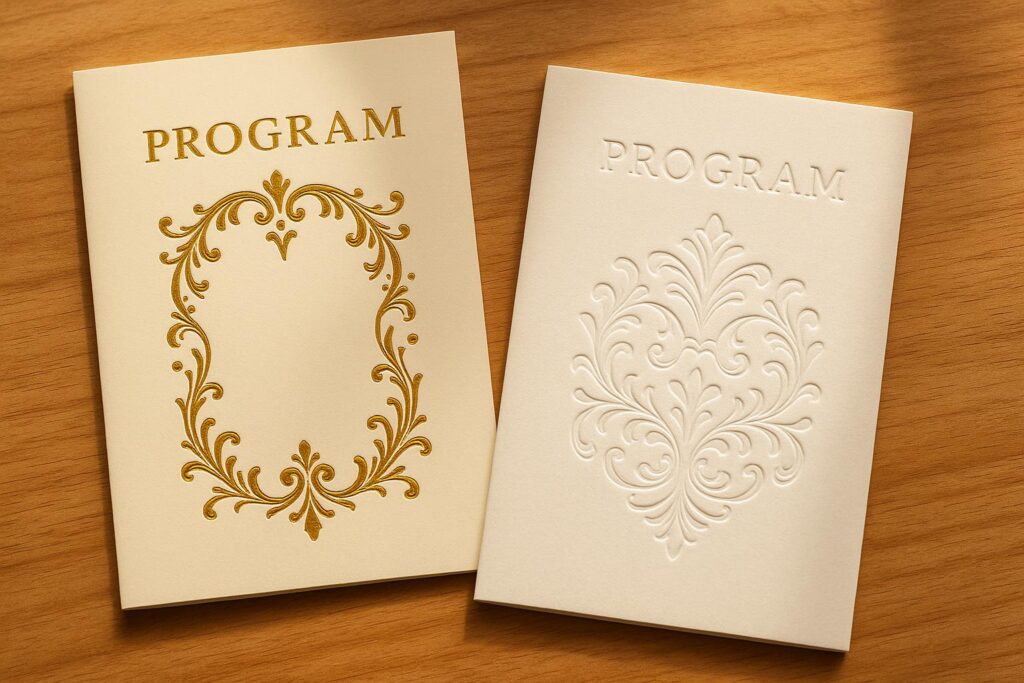
Embossing is a dry or wet technique that presses a design into a surface, creating a raised three-dimensional impression without the addition of any ink or metallic film.
The result is a subtle, tactile effect that is most visible when light rakes across the surface at an angle.
Blind embossing, the most common form, uses no ink or foil. Debossing is the inverse process, where the design is pressed downward rather than raised upward.
Where Embossing Works Best
Embossing is most effective on thicker stocks like leather, heavy card, or uncoated paper where the material can hold a deep, clean impression without tearing.
It is also widely used for corporate stationery, luxury packaging, book covers, and leather goods such as journals and portfolios.
The understated elegance of blind embossing suits brands that prefer a quiet confidence over high-visibility metallic shine, which is why it is frequently chosen for law firms, private banks, and heritage luxury brands.
What Is Foiling?
Foiling, as explored in detail in the previous section of this guide, bonds a metallic or colored film to a surface using heat, pressure, and a custom die.
The result is a high-visibility, reflective finish that immediately draws the eye and reads as premium in virtually any lighting condition.
Foiling can be applied in gold, silver, rose gold, copper, matte black, holographic, and a range of specialty colors.
Where Foiling Works Best
Foiling excels on paper goods, card stock, packaging, and signage where the reflective quality can be fully appreciated in the lighting conditions of the event or display context.
It is particularly effective for wedding stationery, brand activation collateral, luxury gift packaging, and event signage where maximum visual impact at first glance is the goal.
For events that are heavily photographed, foiled elements catch light in ways that make them stand out in images, which is an important consideration for Instagram-worthy brand activations.
Embossing vs Foiling: A Side-by-Side Comparison
Visual Impact
Foiling wins on immediate visual impact, particularly in environments with variable lighting such as event venues, hotels, and retail spaces.
Embossing wins on tactile sophistication. When a guest picks up an embossed invitation or gift card, the three-dimensional depth communicates quality in a way that requires touch to fully appreciate.
Cost Comparison
Both techniques require a custom die, and die creation costs are comparable for standard designs, typically $50 to $300 depending on complexity.
For paper goods production, embossing and foiling are often priced similarly on a per-piece basis. However, foiling requires the additional material cost of the foil film itself, which adds slightly to the per-piece cost at lower volume runs.
At higher volumes, foiling becomes more cost-efficient per unit because the foil film cost is amortized across more pieces.
The full understanding of calligraphy and engraving cost structures provides additional context on how finishing technique choices affect total project cost.
Durability
Embossing is essentially permanent because it is a physical deformation of the material rather than an applied coating.
Foiling is highly durable on quality stock but can crack or flake at fold points if applied over a score or crease, or if the material is not well-suited to the adhesion process.
For items that will be handled frequently, such as loyalty cards, menus, or journals, embossing often provides a more durable long-term finish.
Live Events: Can Both Techniques Be Applied On-Site?
This is where the two techniques diverge most significantly for event planning purposes.
Live Foiling at Events
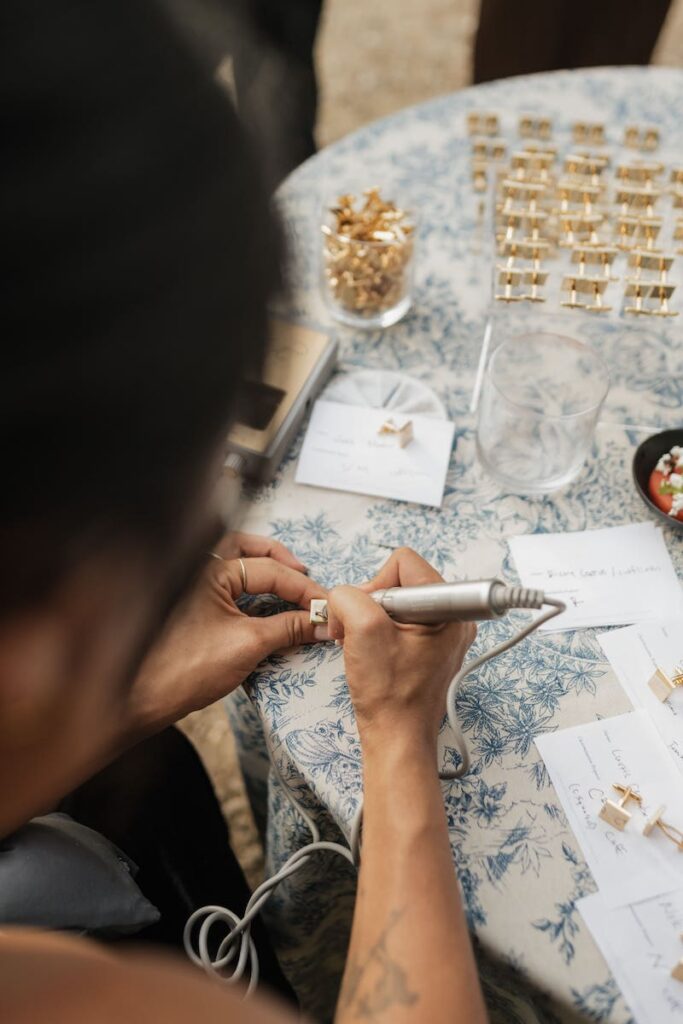
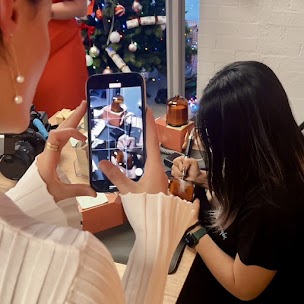
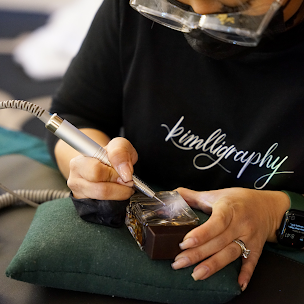
Hot foiling can be executed on-site at events with portable equipment. Artists trained in live foiling can personalize items for guests in real time, combining the visual drama of the live production with the premium finish of the foiled output.
This makes live foiling a genuine event activation option for brand pop-ups, product launches, and retail events where the making process is as important as the finished product.
Live Embossing at Events
Live embossing is less commonly offered as a standalone live event service because the equipment required for deep, clean impressions is heavier and less portable than foiling tools.
However, embossing can be incorporated into pre-event production runs for event collateral that is then distributed at the event, achieving the aesthetic without the live activation component.
Which Technique Is Right for Your Brand?
The right choice depends on three factors: your brand aesthetic, your event context, and your budget.
Brand Aesthetic Alignment
If your brand communicates heritage, restraint, and quiet luxury, embossing aligns better with that identity.
If your brand is expressive, celebratory, or contemporary, foiling’s high visibility and metallic sheen is typically the stronger choice.
For brands that want both effects, combination emboss-and-foil finishes are possible and produce some of the most luxurious paper goods on the market, though they require more complex die setups and higher production budgets.
Event Context
For a brand activation at a trade show or retail event where the finished piece needs to be immediately impressive in a noisy visual environment, foiling delivers more impact per dollar.
For a corporate gifting program where the recipient will have the item in a quiet office setting and interact with it repeatedly over time, embossing may create a more lasting impression of quality.
Budget Considerations
For equivalent design complexity and volume, foiling and embossing are similarly priced at most professional studios.
The key budget decision is really about material choice. Embossing requires a thicker, higher-quality stock to show the impression clearly, which can increase the base paper cost compared to lighter stocks suitable for foiling.
For events where budget is constrained and maximum visual impact is the priority, foiling on a medium-weight premium card typically delivers the best cost-to-impact ratio.
Combining Techniques for Luxury Event Collateral
The most premium event collateral often combines calligraphy, foiling, and embossing on the same piece.
A thick cream card with a blind-embossed border, gold foiled event name, and handwritten calligraphed guest name creates a multi-sensory piece that communicates extraordinary care and quality.
This is the standard of invitation and collateral used by top-tier luxury events, and it is reflected in the pricing structures that luxury gifting concierge services use when sourcing event stationery for premium clients.
Practical Questions to Ask Before You Decide
Before finalizing your choice between embossing and foiling, ask yourself the following.
Will this piece be photographed at the event, or is it primarily a tactile experience? If photography matters, foiling is typically the better choice.
Will the piece be handled repeatedly over time, or is it a single-use item? If durability matters, embossing or a combination finish is preferable.
Does your brand identity lean toward subtle elegance or expressive luxury? That answer almost always points directly to the right technique.
For events that include both stationery and live personalization elements, the live event activations planning guide covers how to sequence these production elements for maximum efficiency and visual impact.
Conclusion
Embossing and foiling are both premium techniques that elevate any event collateral or gifting program well above the baseline.
The choice between them is less about which is better overall, and more about which is better for your specific brand, context, and audience.
For maximum visual impact at a live event or brand activation, foiling wins. For tactile, enduring elegance in a gifting or stationery context, embossing holds its own. For the ultimate expression of luxury, combine both.
Whatever direction you choose, working with an artist who has experience across both techniques ensures the final output reflects the quality your brand is investing in.
Not sure which technique suits your event? Book a free consultation → Contact Carla Schall
FAQ
Foiling applies a metallic film that creates a reflective, high-visibility effect visible from a distance. Embossing creates a raised three-dimensional impression in the material itself with no added color, producing a subtle effect best appreciated up close or when light rakes across the surface.
They are similarly priced at most professional studios, as both require a custom die. Foiling has a slight material cost premium from the foil film itself, but the difference at moderate volumes is usually under $1 per piece and rarely drives the decision on its own.
Yes. Portable hot foiling equipment makes live on-site foiling a viable event activation. It produces immediate, visually striking personalized pieces and functions as both a craft demonstration and a guest experience simultaneously.
Embossing typically produces superior results on leather because the material holds a deep, clean impression extremely well. Foiling on leather is possible but requires specific adhesive formulations and surface preparation to avoid adhesion issues over time.
Yes, and the combination produces some of the most premium paper goods available. A foiled design element paired with a blind-embossed border or texture creates a multi-sensory piece that communicates the highest level of care and craft investment.