

Gothic calligraphy is one of the most visually commanding scripts ever developed. Dense, angular, and historically loaded, it transforms even ordinary words into something that feels ancient and authoritative.
But gothic is not just a historical artifact. In 2026, it remains actively practiced by calligraphers, tattoo artists, graphic designers, and musicians who are drawn to its powerful aesthetic and rich technical heritage. This guide covers what gothic calligraphy is, where it came from, how its many substyles differ, and how you can begin learning it regardless of your current experience level.
What Is Gothic Calligraphy?
Gothic calligraphy, also known as blackletter or textura, is a family of broad-edged pen scripts that dominated Western European manuscript culture from roughly the 12th century to the 15th century. The term “gothic” was originally used dismissively by Renaissance humanists who saw the scripts as barbaric compared to classical Roman letterforms.
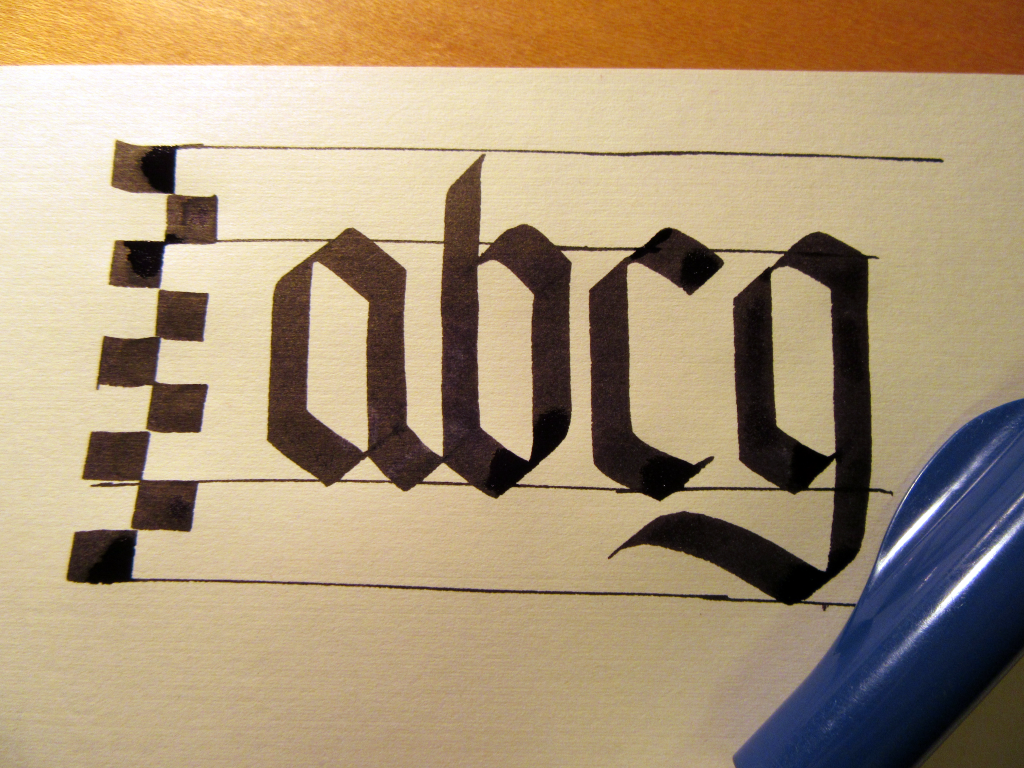
The defining visual characteristic of gothic calligraphy is its dense, angular construction. Letterforms are built from short, compressed vertical strokes with dramatic contrast between thick and thin marks, creating a texture of vertical lines that makes pages appear almost entirely black with ink.
This density was originally functional rather than purely aesthetic. Parchment and vellum were extremely expensive materials in medieval Europe. By compressing letterforms and eliminating rounded curves, scribes could fit considerably more text onto each page, reducing the material cost of producing manuscripts.
The Historical Origins of Gothic Script
Gothic calligraphy emerged in northern Europe during the Carolingian period as scribes began pushing their broad-edged pens in more angular, compressed directions than the rounder Carolingian minuscule that preceded it.
By the 12th century, distinct gothic hands were in use across England, France, Germany, and the Low Countries. The most formal of these, Textura Quadrata, became the standard hand for liturgical manuscripts, legal documents, and books of hours. It is the script most commonly associated with medieval Bibles and manuscripts viewed in museum collections today.
The Gutenberg Bible, one of the first major books printed using movable type, used a Textura-inspired typeface. This decision established gothic letterforms as the default aesthetic for printed German text well into the 20th century.
Gothic’s decline in mainstream use came with the Italian Renaissance, when humanist scholars revived classical Roman letterforms and promoted more rounded, legible hands. The scripts that emerged from this revival became the ancestors of modern italic and foundational calligraphy.
The Major Gothic Calligraphy Styles
Gothic is not a single script. It is a family of related hands that developed across different regions and time periods. Understanding the major substyles is essential for anyone wanting to study or practice gothic calligraphy.
Textura Quadrata
Textura Quadrata is the most formal and geometrically precise of all gothic hands. Its name refers to the woven textile texture created when lines of text are written closely together. Letters are extremely compressed, with vertical strokes of equal weight separated by precise diamond-shaped serifs at the top and bottom.
This is the script of religious and legal manuscripts. Its rigidity and formality made it ideal for texts intended to communicate authority and permanence. It is also technically among the most demanding gothic substyles to execute well, requiring a perfectly consistent nib angle of approximately 40 to 45 degrees and precise rhythm across every letter.
Fraktur
Fraktur is the German gothic variant that dominated German printing and official writing from the 16th century until it was officially abandoned in 1941 under Nazi policy (in an ironic turn, it was replaced by the Roman type associated with the “decadent” Western culture the regime otherwise opposed).
Fraktur retains the angular character of Textura but introduces broken curves, particularly on letters like o, a, and g, that give the script its name. These broken curves make Fraktur slightly more readable than strict Textura while maintaining its commanding gothic presence.
Fraktur remains visually prominent in German-language contexts and is widely recognized in Western culture from its use in newspaper mastheads, military insignia, and tattoo lettering.
Bastarda (Secretary Hand)
Bastarda developed as a hybrid between formal gothic and more cursive everyday writing hands. It retains many gothic characteristics but introduces more fluid connections between letters and greater variation in stroke weight.
Bastarda was widely used for everyday correspondence and documents in the 14th and 15th centuries. It is sometimes called Secretary Hand in the English historical record, and many historical documents from this period are written in Bastarda variants.
For calligraphers interested in historical authenticity, Bastarda offers a more fluid and expressive alternative to strict Textura while remaining recognizably gothic in character.
Rotunda
Rotunda developed in southern Europe, particularly Italy and Spain, as a more rounded interpretation of gothic forms. Its letterforms are considerably less compressed than Textura or Fraktur, making it noticeably more legible to modern eyes.
Rotunda represents the aesthetic bridge between gothic and humanist scripts and was actively used in Italian manuscripts during the same period when humanist scholars were developing italic as a deliberate alternative.
For learners who are drawn to gothic aesthetics but find strict Textura too mechanical, Rotunda is an accessible and beautiful entry point.
Uncial and Half-Uncial (Proto-Gothic)
While technically predating the gothic period, Uncial and Half-Uncial scripts are often grouped with gothic study because they share the broad-edged nib aesthetic and appeal to many of the same learners. These early medieval scripts, used in texts like the Book of Kells, have a rounded, open quality distinct from later gothic hands but share a significant visual and historical kinship.
Gothic Calligraphy Tools and Materials
Gothic calligraphy is written with a broad-edged or flat-edged nib, either a dip pen nib or a fountain pen with an italic cut. The most critical tool factor is nib width relative to the x-height of your letters.
Nib Width and Letter Proportions
In gothic calligraphy, letter height is measured in nib widths. Textura Quadrata, for example, has an x-height of approximately five nib widths. A letter written with a 2mm nib should have a body height of 10mm. This ratio system ensures that your thick and thin strokes remain proportional regardless of the scale at which you are writing.
Learning to use nib ladders (a series of stacked horizontal marks equal to the nib width) to set your guideline heights is a foundational technique in formal calligraphy education. It applies to gothic and all other broad-edged scripts.
Ink and Paper for Gothic
Gothic calligraphy produces bold, dense marks that require good ink opacity. Black India ink or quality sumi ink works well. For decorative or historical reproduction work, gum arabic-based inks or mineral pigments provide a historically authentic texture.
Paper choice is less restrictive than for pointed pen scripts because broad-edged nibs are considerably more robust. Smooth cartridge paper, layout paper, and even quality printer paper are acceptable for practice. Watercolor paper works well for finished pieces where slight texture adds to the character.
Understanding the full range of calligraphy supplies available for different styles helps beginners match their material choices to their specific script goals.
How to Get Started with Gothic Calligraphy
Gothic calligraphy is not the most beginner-friendly starting point among calligraphy styles, but it is far from inaccessible. With the right approach, you can be forming recognizable gothic letterforms within your first few practice sessions.
Start with Strokes Before Letters
Gothic letters are built from a limited set of repeating strokes: the vertical minim stroke, the diamond serif entrance stroke, the angled exit stroke, and the diagonal compound curve. Spend your first session practicing these four strokes in isolation before attempting any letters.
The vertical minims of gothic calligraphy must be parallel, consistent in height, and evenly spaced. This consistency is what creates the woven texture that defines the style. Most beginner errors in gothic trace back to inconsistent minim spacing.
Begin with Textura or Fraktur
Despite being more formal, Textura is often recommended as the starting point for gothic learners because its strict geometric construction forces precision from the beginning. Developing that precision first makes all other gothic styles easier to approach.
Fraktur is slightly more expressive and slightly more forgiving of minor inconsistencies, making it a popular alternative first choice for learners who want to explore gothic with a more dynamic feel.
Reference Historical Models
Gothic calligraphy has an extensive archive of authentic historical examples in digitized museum collections. Studying actual manuscript pages from institutions like the British Library’s Digitised Manuscripts collection provides genuine historical context and visual references that no modern workbook can replicate.
Understanding the historical context of the script you are learning makes your practice significantly more meaningful and informed.
Applications of Gothic Calligraphy in Contemporary Contexts
Gothic calligraphy is actively used in numerous modern contexts beyond historical reproduction. Tattoo lettering is perhaps the most visible contemporary application. Gothic scripts remain the dominant choice for traditional old-school tattoo text, and skilled calligraphers are regularly commissioned for custom lettering artwork that tattoo artists then execute.
Music, particularly heavy metal and punk subcultures, has kept gothic typography central to album artwork, merchandise, and band identity design for decades. The script’s aggressive visual weight aligns naturally with the aesthetic ambitions of these genres.
Certificates, diplomas, and academic honors frequently use gothic-inspired typography to communicate institutional authority and permanence. Wedding invitations with a historical, dramatic, or maximalist aesthetic increasingly incorporate gothic elements as a counterpoint to the dominant script and modern styles.
For those interested in modern vs traditional calligraphy and where each style fits contemporary applications, gothic represents one of the most culturally rich examples of a traditional script maintaining active relevance.
What Is Gothic Calligraphy? A Summary for Learners
Gothic calligraphy is a family of broad-edged pen scripts originating in medieval Europe, defined by compressed, angular letterforms, dense texture, and dramatic thick-thin stroke contrast. Its major substyles, Textura Quadrata, Fraktur, Bastarda, and Rotunda, each reflect the specific cultural and functional contexts in which they developed.
Today it remains one of the most visually powerful scripts available to calligraphers and lettering artists. It requires patience, technical precision, and an appreciation for historical context, but rewards those qualities with a script that carries over 800 years of visual authority in every line.
FAQ
Gothic is more technically demanding than italic or modern calligraphy, but it is accessible with the right approach. Starting with stroke drills, using appropriate guidelines, and choosing Textura or Rotunda as a first substyle makes the learning process structured and achievable.
A broad-edged or flat-cut nib is required. For Textura, a rigid nib of 1.5mm to 3.5mm is appropriate depending on the scale of your letters. For Fraktur, a slightly wider nib produces more dramatic texture. Pilot Parallel pens are a good fountain pen option for beginners.
Yes, though it suits specific aesthetic directions. Gothic elements work beautifully in dark, dramatic, or maximalist wedding aesthetics and pair effectively with black envelopes, letterpress printing, and deep-color stationery. It is less common in classic or romantic wedding styles.
They refer to the same family of scripts. “Gothic” describes the historical period and style, while “blackletter” describes the visual density of the ink coverage on the page. Both terms are used interchangeably in modern calligraphy.
With consistent daily practice of 20 to 30 minutes, most beginners develop recognizable and reasonably consistent gothic letterforms within six to ten weeks. The mechanical precision required for Textura in particular requires more time than looser styles.
Explore gothic and all major calligraphy styles with Carla in a live Florida workshop where hands-on practice replaces hours of guesswork. Book your session at carlaschall.com