

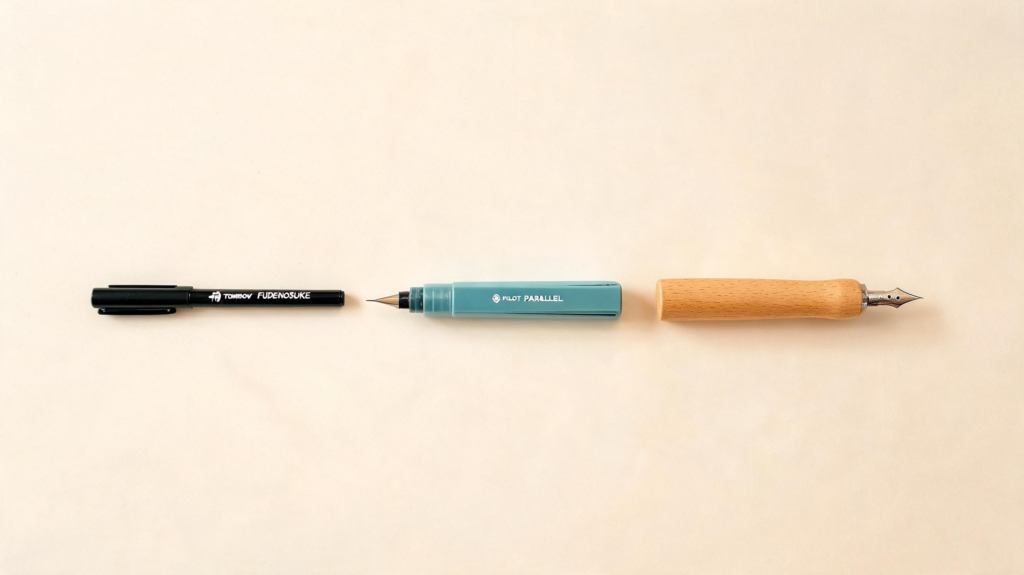
The best calligraphy pen for most beginners is the Tombow Fudenosuke brush pen (around $5–$10) if you want to start with modern calligraphy, or the Pilot Parallel Pen (around $10–$18) if you want to start with Italic or broad-edge scripts. If you’re drawn specifically to traditional pointed-pen scripts like Copperplate, start with a Nikko G nib (around $4–$5) on a simple straight holder rather than an expensive boxed set. All three are forgiving, require no ink-mixing to get started, and are what most working calligraphy instructors actually recommend to their own beginner students.
Choosing your first calligraphy pen shouldn’t feel harder than actually learning to write with it, but with dozens of nib types, brands, and price points, it’s easy to either overspend on a kit you don’t need or underspend on tools that fight your technique from day one. This guide breaks down the best calligraphy pens by style, skill level, and budget — plus what to buy for ink, paper, and books alongside your first pen.
Quick-Pick Table: Best Calligraphy Pens by Category
| Category | Best Pick | Price | Best For |
| Best overall beginner pen | Tombow Fudenosuke (hard tip) | $5–$10 | Modern calligraphy, brush lettering |
| Best for Italic/broad-edge scripts | Pilot Parallel Pen (2.4mm or 3.8mm) | $10–$18 | Italic, envelope addressing |
| Best for pointed-pen/Copperplate | Nikko G nib + straight holder | $4–$8 combined | Copperplate, Spencerian |
| Best brush pen set | Tombow Dual Brush Pens | $12–$15 (3-pack) | Colorful, expressive brush lettering |
| Best budget fountain pen | Kaweco Calligraphy Sport | $20–$25 | Portable Italic practice |
| Best for professionals/upgraders | Hunt Globe 513EF or Brause EF66 nib | $3–$6 per nib | Finer, more expressive line variation |
| Best oblique holder | Penmanship-style oblique holder | $20–$35 | Maintaining consistent Copperplate slant |
| Best all-in-one starter kit | Speedball Calligraphy Starter Kit | $15–$25 | Complete beginners wanting everything in one box |
Best Calligraphy Pens for Absolute Beginners
If you’re picking up calligraphy for the first time, the tool that matters most isn’t the most expensive one — it’s the one that removes as many variables as possible while you’re learning the fundamentals.
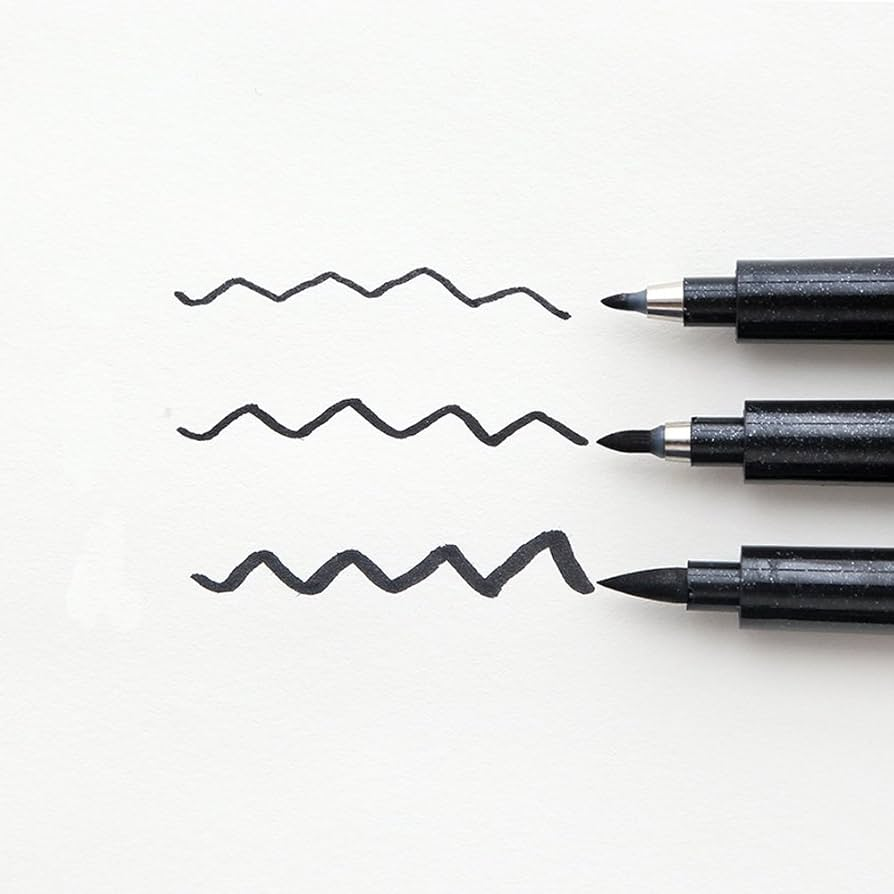
Tombow Fudenosuke Brush Pen ($5–$10) — The single most recommended first pen for modern calligraphy. It comes in two tip firmness options: the hard tip is easier to control for total beginners, while the soft tip offers more expressive line variation once you’re comfortable. No ink mixing, no dipping, and forgiving enough that a shaky first attempt still looks reasonably polished.
Pilot Parallel Pen ($10–$18) — The standard recommendation for anyone starting with Italic or other broad-edge scripts. Its unique nib uses two parallel plates that dispense ink along the entire edge, producing consistent line variation without the technique demands of a dip pen. It comes in multiple nib widths (1.5mm, 2.4mm, 3.8mm, 6.0mm), with 2.4mm being the most versatile starting size for most beginners.
Nikko G Nib + Straight Holder ($4–$8 combined) — If Copperplate or another pointed-pen script is your goal from day one, skip the boxed beginner sets and buy a Nikko G nib and a basic straight pen holder separately. The Nikko G is stiff enough to be forgiving of inconsistent pressure while still producing genuine thick-thin contrast, which is exactly the balance a first-time pointed-pen calligrapher needs.
Best Calligraphy Pen Sets and Kits for Beginners
If you’d rather buy one complete kit than assemble pieces individually, here’s what a genuinely useful beginner kit should include — and roughly what it should cost.
For pointed-pen calligraphy: A Nikko G nib (pack of 10, around $5), a Speedball straight holder (around $8), walnut or sumi ink ($12–$18), and smooth practice paper such as Rhodia or Clairefontaine ($10). Total investment: approximately $35–$40.
For brush pen calligraphy: Three Tombow Dual Brush Pens in black, a mid-tone, and a highlight color ($12–$15), plus a pad of bleed-proof marker paper ($10). Total investment: approximately $22–$25.
For fountain pen calligraphy: A Pilot Parallel Pen in 2.4mm ($18), a bottle of compatible ink ($10), and a pad of layout paper ($10). Total investment: approximately $38–$40.
Are pre-boxed “calligraphy starter kits” worth it? Sometimes. A well-assembled kit like the Speedball Calligraphy Starter Kit bundles a holder, a few nibs, ink, and guide sheets into one purchase, which is convenient if you’d rather not research individual pieces. The trade-off is that boxed kits sometimes include lower-quality nibs than buying components individually — if you go this route, it’s worth checking that the included nib is a known, well-reviewed model (Nikko G, Speedball B-series, or similar) rather than an unbranded generic one.
Best Calligraphy Pens by Style
Different calligraphy styles genuinely need different tools — the pen that’s perfect for Copperplate will fight you if you try to use it for Modern Calligraphy, and vice versa. For the complete breakdown of every major style these pens correspond to, see our full guide to types of calligraphy styles.
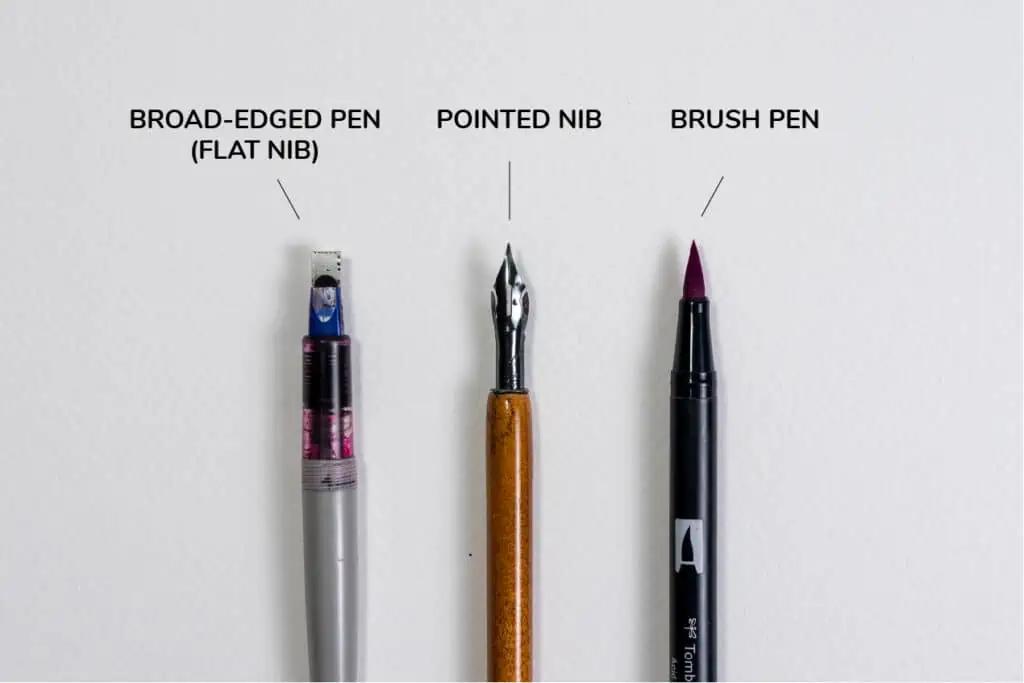
For Modern Calligraphy and Brush Lettering: Tombow Fudenosuke (hard tip for control, soft tip for expression) or Tombow Dual Brush Pens for a wider color range and blending capability. Pentel Fude Touch Brush Sign Pens are a strong, slightly softer alternative, especially well regarded for their saturated, wide color range.
For Copperplate and Spencerian (pointed-pen scripts): A Nikko G nib to start, moving to a Brause EF66 or Hunt Globe 513EF nib once your pressure control is consistent and you want finer, more expressive hairlines. Pair with an oblique pen holder once you’re past the fundamentals — it maintains the correct slant angle far more naturally than a straight holder for extended writing sessions. For the complete head-to-head on this script and its close cousin, see our Copperplate vs Italic guide.
For Italic and other broad-edge scripts: The Pilot Parallel Pen is the most recommended starting tool by a wide margin, thanks to its combination of accessibility, consistent ink flow, and genuine beginner success rate. A broad-edge calligraphy marker is a lower-cost alternative if you want to try the style before investing in a fountain pen.
For Gothic and other historical broad-edge hands: The same broad-edge tools used for Italic apply here — a Pilot Parallel in a wider nib size (3.8mm or 6.0mm) suits the denser letterforms Gothic scripts require. See our complete Gothic calligraphy guide for style-specific technique.
For faux calligraphy: No special pen required — any standard gel pen, marker, or even a basic pencil works, since the thick-thin effect is drawn in afterward rather than created by the tool itself.
Best Calligraphy Pens for Professionals and Upgraders
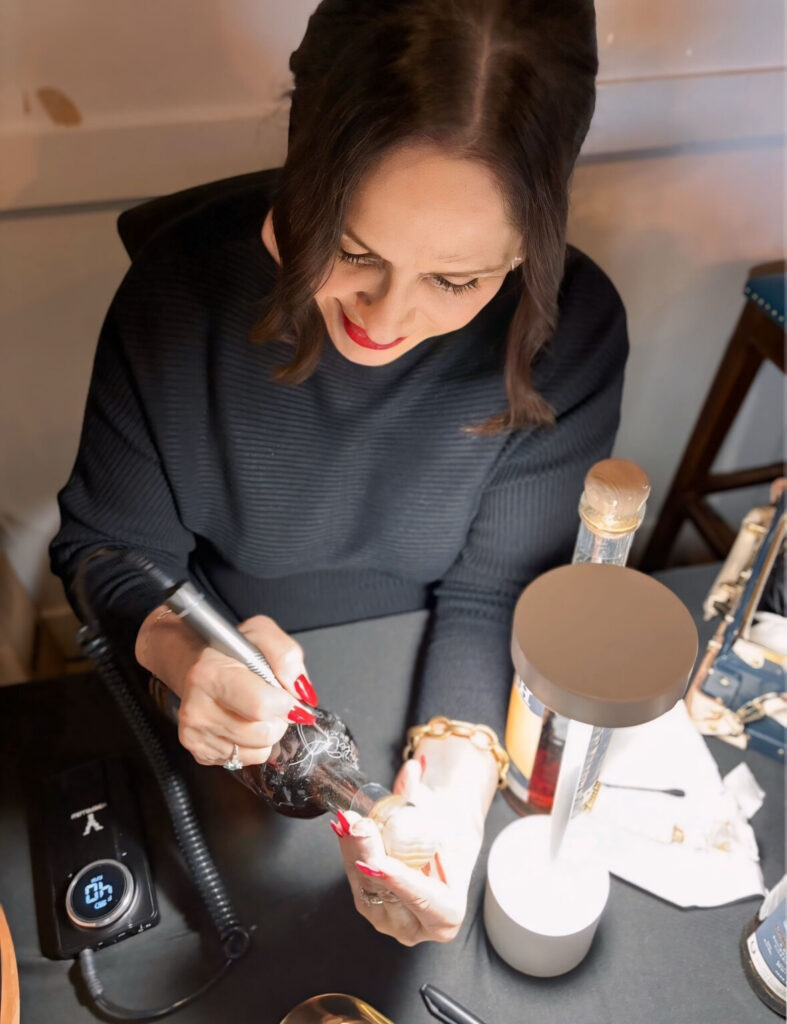
Once your fundamentals are solid and you’re looking to move beyond beginner-friendly forgiveness toward more expressive, responsive tools, here’s where most working calligraphers upgrade to:
- Hunt Globe 513EF nib — A finer, more flexible alternative to the Nikko G, favored by many professionals for its expressive hairline-to-swell contrast once pressure control is second nature.
- Brause EF66 (Bandzug or Blue Pumpkin) nib — Popular among calligraphers moving into broad-edge historical scripts, prized for crisp, clean edges.
- A quality oblique holder (roughly $20–$35 for a well-made model) — At the professional level, a holder that positions the nib at a precise, consistent angle stops being a convenience and starts being a genuine technique tool, particularly for maintaining a consistent Copperplate slant of roughly 52–55 degrees across a long project.
- Tombow’s full 108-color Dual Brush Pen library — For calligraphers doing colorful, expressive brush lettering work professionally, having the complete color range available (rather than a small starter set) genuinely matters for client and commission work.
Fountain Pens for Calligraphy
Fountain pens occupy a useful middle ground between the ease of a brush pen and the traditional feel of a dip pen — no ink mixing or dipping required, but genuine, adjustable line variation.
- Pilot Parallel Pen — The clear standout in this category, available in four nib widths, with a distinctive flat, parallel-plate nib design that produces reliable, juicy ink flow.
- Kaweco Calligraphy Sport — A compact, pocket-friendly option (around $20–$25) with a 1.1mm nib that flows freely, making it a good travel or on-the-go practice companion once you’re past complete beginner status.
- A dedicated calligraphy fountain pen ink — Standard fountain pen ink works, but calligraphy-specific inks are formulated for the wider nib and tend to produce cleaner line definition.
Digital Calligraphy Tools for 2026
Not all calligraphy happens with physical ink anymore. If you’re interested in digital lettering — for social content, digital invitations, or practicing letterforms on a tablet — a few tools are worth knowing:
- Stylus-based drawing apps on a tablet (using a pressure-sensitive stylus) can simulate genuine pressure-based thick-thin contrast, making them a reasonable practice tool when physical materials aren’t convenient.
- Calligraphy font generators and design tools let you create a calligraphy-styled look for printed materials without hand-lettering skill at all — useful for invitations or branding, though it’s a fundamentally different skill from hand calligraphy itself. For more on this distinction, see our how to create wedding invitation calligraphy guide, which covers digital and font-based options in detail.
- Digital tools are a genuinely useful supplement, not a full replacement, for anyone serious about developing real hand-lettering skill — the muscle memory and pressure control that transfer to physical calligraphy still come from practicing with a physical pen.
Calligraphy Ink Buying Guide
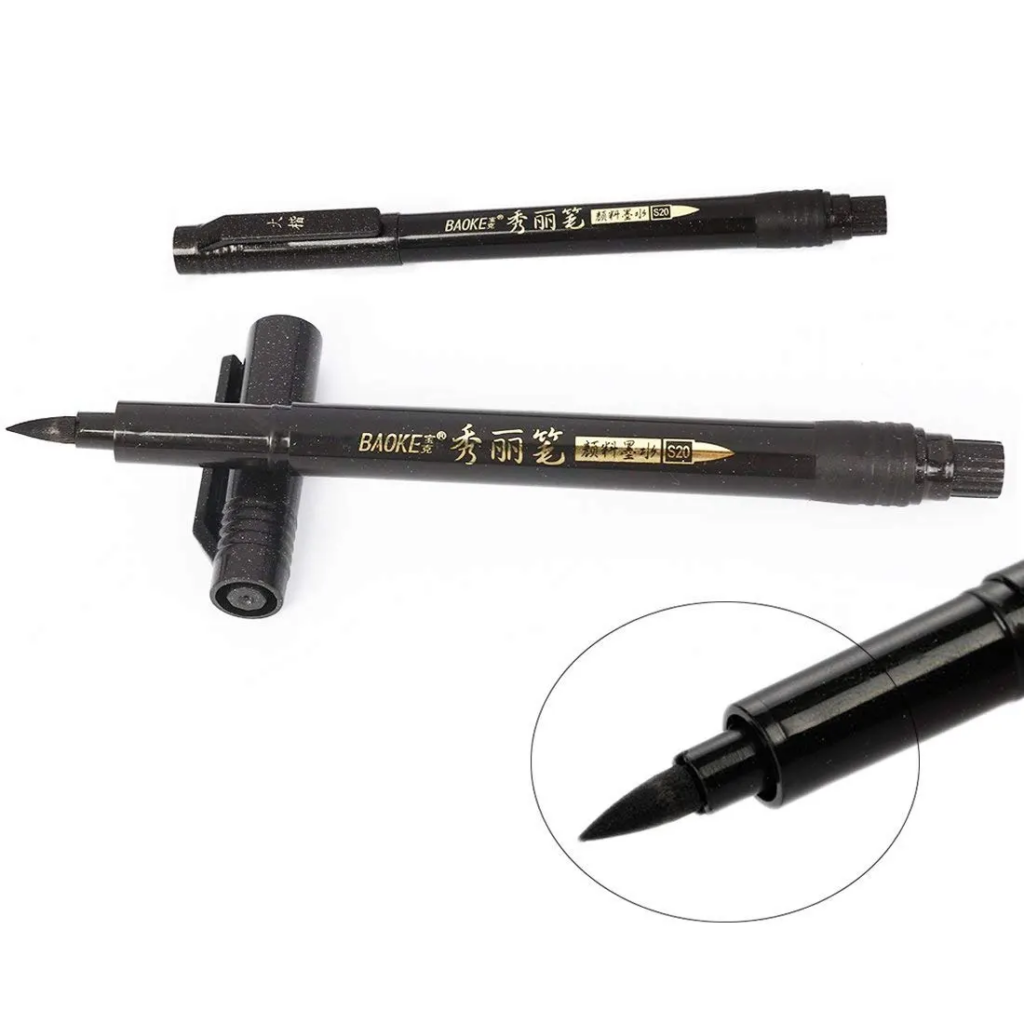
Your ink choice affects line quality as much as your pen or nib does, and different projects call for different types.
- Sumi ink — A traditional, smooth-flowing, deeply pigmented ink favored for pointed-pen practice and finished pieces alike; widely considered a strong default choice for beginners starting Copperplate.
- Walnut ink — A warmer, sepia-toned alternative to black sumi ink, popular for a softer, more vintage aesthetic on invitations and art pieces.
- Waterproof inks (such as Dr. Ph. Martin’s) — Essential if you plan to pair your lettering with watercolor or other wet media, since standard calligraphy ink will bleed or lift under water-based color.
- Fountain pen ink — Use only ink specifically rated safe for fountain pens in a Pilot Parallel or similar tool; standard dip-pen inks can clog or damage a fountain pen’s internal mechanism.
- Metallic inks — Add a formal, luxurious finish for invitations or gift pieces, but require more frequent nib cleaning, since metallic particles settle and can clog a nib faster than standard ink.
Recommended Calligraphy Books for Beginners
If you want structured, guided practice alongside your new pen, a few titles are consistently recommended across the calligraphy community:
- “Modern Calligraphy” by Molly Suber Thorpe — One of the most widely recommended starting points for brush and modern calligraphy specifically, covering foundational strokes through full alphabets.
- General pointed-pen instructional guides from established calligraphy organizations — Many long-established calligraphy societies (IAMPETH among them) publish free or low-cost instructional material specifically for pointed-pen and broad-edge fundamentals, worth exploring alongside a paid book.
Pairing a book with hands-on practice sheets and, ideally, some in-person feedback tends to produce faster, more consistent progress than working from a book alone — see our beginner calligraphy style guide for a full learning path, or book a workshop for guided, hands-on instruction.
Choosing Pens for Specific Projects
A few beginners search for pen recommendations tied to a specific project rather than a general style — here’s quick guidance for the most common ones.
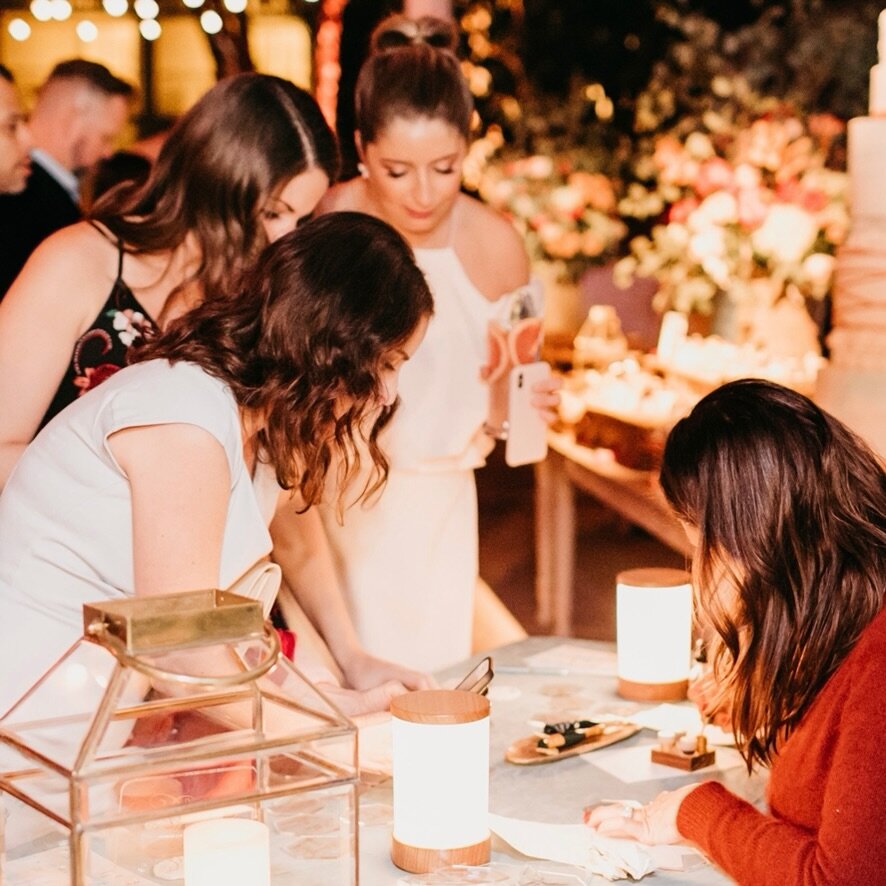
Best pens for greeting cards and envelope addressing: A Tombow Fudenosuke for a relaxed, modern look, or a Nikko G with an oblique holder for a formal, traditional look. For the complete etiquette and technique breakdown, see our wedding envelope calligraphy guide.
Best pens for typographic or lettering design work: A broad-edge Pilot Parallel for structured, geometric letterforms, or a wider Tombow Dual Brush Pen for bolder, more illustrative lettering typical of hand-lettered design pieces.
Best pens for occasional or amateur use: A single Tombow Fudenosuke is genuinely enough for occasional greeting cards, journaling, or gift tags — there’s no need to invest in a full kit if calligraphy is an occasional hobby rather than a developing skill you’re practicing regularly.
A Budget Breakdown by Skill Level
- First-time beginner (under $25): One brush pen (Tombow Fudenosuke) or one Nikko G nib with a basic straight holder, plus a pad of practice paper. This is genuinely enough to determine whether you enjoy the craft before investing further.
- Committed beginner ($25–$75): A complete kit for your chosen style (see the kit breakdowns above), plus a beginner instructional book or a few guided practice sessions.
- Intermediate/upgrading ($75–$150): A quality oblique holder, one or two upgraded nibs (Brause EF66 or Hunt Globe 513EF), a wider ink selection, and higher-quality practice or project paper.
- Professional-level setup ($150+): A curated collection of nibs across multiple flex levels, a full brush pen color library if doing colorful commission work, professional-grade inks and papers, and dedicated tools for your specific specialty (engrossing, wedding stationery, live event work).
Where to Buy Calligraphy Pens
Online: Amazon carries most of the pens recommended in this guide (Tombow, Pilot Parallel, Nikko G nibs) at competitive prices, with the convenience of fast shipping if you want to start practicing immediately. Specialty retailers like JetPens and dedicated calligraphy supply shops often carry a wider selection of nib types and finer imported inks than general retailers.
In person: Art supply stores and dedicated stationery shops sometimes stock a curated beginner selection, and buying in person lets you actually test how a pen feels in your hand before committing — genuinely useful if you’ve never held a brush pen or dip pen before. If you’re located in Florida, see our guide to calligraphy supplies near you for local sourcing options.
Pricing varies by region. International buyers should expect some price variation compared to U.S. listings due to shipping, import duty, and currency differences — the core recommendations in this guide (Tombow, Pilot, Nikko G) are globally available brands, even if specific listing prices differ by country.
Troubleshooting Common Pen and Ink Flow Problems
- Ink isn’t flowing from a new dip nib. New nibs often have a thin factory coating that repels ink. Wipe the nib with rubbing alcohol or a small amount of dish soap and water before first use to remove it.
- Brush pen tip is splaying or fraying. This usually means too much pressure is being applied consistently rather than varying between thick downstrokes and thin upstrokes — ease up on pressure during upstrokes specifically to extend the tip’s lifespan.
- Fountain pen skips or produces inconsistent lines. Check that you’re using ink specifically rated safe for fountain pens, and that the nib is correctly seated in the pen body — a loose or misaligned nib is a common, easily fixed cause of inconsistent flow.
- Dip pen catches or tears the paper. This is almost always a paper problem, not a nib problem — switch to smoother, less absorbent paper, since a fine pointed nib will catch on rough or heavily textured surfaces regardless of technique.
- Ink dries out mid-session. Keep your ink bottle capped between dips, and consider a small ink well with a lid if you’re working in a dry climate, since evaporation can thicken ink surprisingly quickly during a long practice session.
How to Test a Pen Before Committing to a Full Kit
If you’re unsure which style or pen suits you, a low-cost way to test before investing further:
- Buy a single brush pen and a single Nikko G nib with a basic holder — together, well under $15 — rather than a full kit in either direction.
- Practice basic strokes with both for a week or two. Notice which feels more natural, which produces results you’re happier with, and which style you find yourself wanting to practice more.
- Invest further in whichever direction you gravitated toward, now backed by real experience rather than a guess. This approach costs a few dollars more than picking one path outright, but it meaningfully reduces the risk of buying a full kit for a style you end up not enjoying.
Common Mistakes When Choosing a Calligraphy Pen
- Buying a large boxed set before knowing your style. A generic “50-piece calligraphy set” often includes tools for styles you’ll never use, when a single well-chosen pen for your actual target style serves you far better.
- Choosing based on price alone. The cheapest available pen is often genuinely harder to write with (inconsistent ink flow, stiff or scratchy nibs) than a slightly pricier, well-reviewed option — for calligraphy specifically, a few extra dollars on a known-good pen usually pays for itself in reduced frustration.
- Skipping a nib entirely for a “calligraphy marker.” Standard calligraphy markers can be a reasonable low-commitment starting point, but they generally can’t produce the genuine pressure-based contrast a real nib or brush pen offers, which limits how far your technique can develop with that tool alone.
- Using standard printer paper with a wet dip nib. This is one of the most common causes of new calligraphers blaming their technique when the paper is actually the problem — rough or absorbent paper will make even a good nib feather and skip.
- Ignoring nib maintenance. A new nib often has a thin factory coating that repels ink; a quick wipe with rubbing alcohol or a pass through a flame (carefully) before first use solves ink-flow problems many beginners mistake for a technique issue.
Frequently Asked Questions
For most beginners, the Tombow Fudenosuke brush pen (for modern calligraphy) or the Pilot Parallel Pen (for Italic and broad-edge scripts) are the most recommended starting tools, since both are forgiving, affordable, and require no ink-mixing.
A well-assembled set matched to your target style is best — for pointed-pen scripts, a Nikko G nib, straight holder, ink, and smooth paper (roughly $35–$40 total); for brush lettering, a small set of Tombow Dual Brush Pens with bleed-proof paper (roughly $22–$25 total).
Brush pens (Tombow Fudenosuke) are best for modern calligraphy, fountain pens (Pilot Parallel) are best for Italic and broad-edge scripts, and a simple pointed dip nib (Nikko G) is best for those specifically wanting to learn Copperplate or Spencerian from the start.
A single Tombow Fudenosuke brush pen is genuinely sufficient for occasional greeting cards, journaling, or gift tags, without needing to invest in a full kit.
Working calligraphers commonly upgrade to a Hunt Globe 513EF or Brause EF66 nib for more expressive line variation, paired with a quality oblique holder and Tombow’s full color range of Dual Brush Pens for colorful commission work.
Dip pens require repeatedly dipping the nib in ink and offer more line variation and ink choices, making them ideal for traditional scripts. Fountain pens have a built-in ink reservoir for convenience and consistent flow, making them a popular choice for beginners before progressing to a dip pen.
Yes. Broad-edge scripts (Italic, Gothic) need a flat-edged nib or fountain pen, pointed-pen scripts (Copperplate, Spencerian) need a flexible pointed nib, and modern calligraphy or brush lettering needs a flexible brush pen — using the wrong tool for a given style will genuinely fight your technique.
A single well-chosen pen for your target style, under $25, is genuinely enough to start and determine whether you want to continue investing further. There’s no need to buy a large kit before you know which style you enjoy.
They’re a useful supplement, particularly for design and font-based work, but the muscle memory and pressure control central to real calligraphy skill still develop through practicing with a physical pen, not a digital tool alone.
Sumi ink is a strong, widely recommended default for pointed-pen beginners thanks to its smooth flow and deep pigment. Walnut ink offers a softer, vintage look, and dedicated fountain pen ink should always be used in fountain pens specifically to avoid clogging.
Choosing the right pen is the first real step, but nothing accelerates progress like real-time feedback on your technique. Book a beginner calligraphy workshop with Carla to get hands-on guidance with your new tools, or explore our full guide to types of calligraphy styles if you’re still deciding which script to learn first.