

A wedding seating chart is one of the most practical pieces of wedding stationery: it tells 120 guests where to sit, prevents confusion during the cocktail hour transition, and signals that the evening has been thoughtfully organized.
When that seating chart is handwritten in beautiful calligraphy, it becomes something else entirely. It becomes a focal point. A photo opportunity. A piece of art.
Understanding how to plan, commission, and display a calligraphy seating chart, and doing it correctly, is the difference between a stressful last-minute scramble and one of the most admired details of your entire reception.
Why Calligraphy Seating Charts Outperform Printed Alternatives
The practical function of a seating chart is the same whether it is printed or handwritten.
What changes is how guests interact with it.
A printed seating chart in a matching font is functional. A handwritten seating chart in calligraphy is a destination.
Guests linger longer, point things out to each other, and photograph it in ways they would never photograph a printed alternative.
Photographers specifically seek out handwritten seating charts for detail shots that become part of the wedding gallery, which means your calligraphy seating chart appears in the images you share for years to come.
The broader argument for choosing calligraphy over printed alternatives makes the case in detail with specific examples from real weddings.
Formats for Wedding Seating Charts
There are several display formats for calligraphy seating charts, each with different aesthetic qualities and logistical requirements.
Mirror Seating Charts
A large freestanding mirror with names and table assignments written directly onto the glass surface in calligraphy is currently one of the most photographed display formats at Florida weddings.
The reflective quality of the mirror creates beautiful depth in photographs and pairs well with virtually any venue aesthetic.
Mirror seating charts require transport to the venue and secure positioning to prevent tipping, which requires coordination between your calligrapher, venue team, and florist if styling elements are added around the frame.
Wooden Board Seating Charts
Writing directly onto a painted, stained, or raw wood surface creates a warm, organic aesthetic that is particularly effective for rustic, bohemian, or garden wedding themes.
Wood requires preparation to ensure the calligraphy ink adheres cleanly, and the material must be sealed after the calligraphy is completed to protect the work from moisture and handling.
Large Format Paper or Acrylic Panels
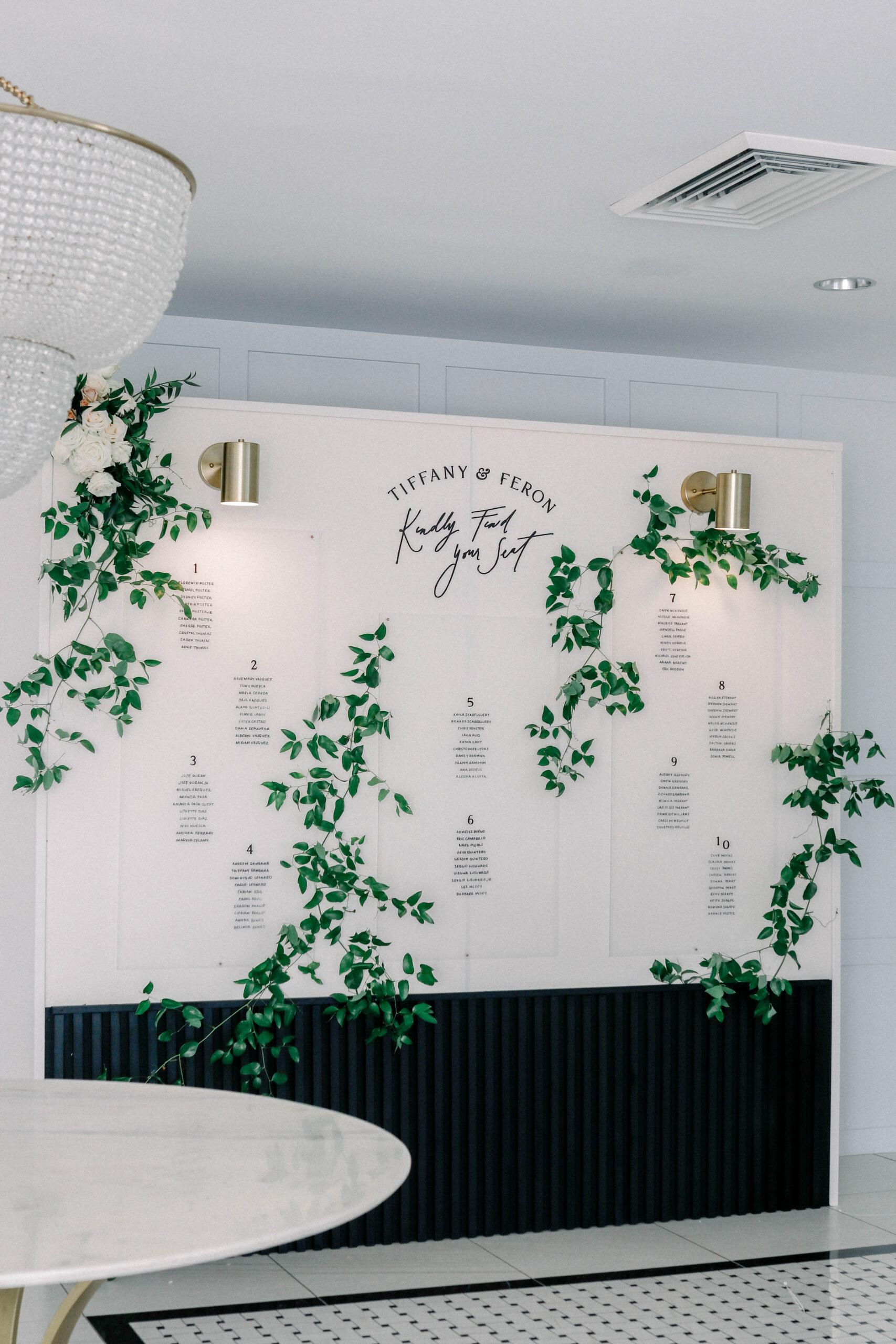
Writing on heavy-duty calligraphy paper, illustration board, or acrylic panels provides flexibility in transport and display, and acrylic in particular creates a modern, translucent aesthetic that is highly popular for contemporary weddings.
For weddings in venues with strong natural light, a backlit acrylic seating chart produces a particularly striking visual effect.
Sizing for Wedding Seating Charts
The right size for your seating chart depends on your guest count, your venue dimensions, and how the chart will be displayed.
General Sizing Guidelines by Guest Count
For 50 to 80 guests with 6 to 10 tables, a chart size of approximately 24 by 36 inches is typically adequate for clear, legible calligraphy with comfortable spacing.
For 100 to 150 guests with 10 to 15 tables, 36 by 48 inches or larger is generally required to maintain legibility while fitting all names without crowding.
For 150 to 200 guests, a double-panel display or a custom oversize format is recommended, as attempting to fit this many names onto a single standard-format chart without compromising legibility results in text that is difficult to read from standing distance.
Discussing the intended viewing distance with your calligrapher during the planning stage helps determine the optimal minimum letter height for your guest count and display format.
The Importance of Guest Name Legibility
The seating chart is, above all, a functional piece that guests need to use quickly and confidently.
Beautiful calligraphy that is too small to read from three feet away, or too densely arranged to find names quickly, defeats the purpose of the piece.
Professional calligraphers plan the layout of seating charts with both visual proportion and practical legibility in mind, which is why working with an experienced wedding calligrapher rather than a generalist lettering artist matters for this specific application.
Information Layout: How to Organize Guest Names
There are two standard organizational formats for wedding seating charts: alphabetical by guest last name, or organized by table number.
Alphabetical by Guest Name
This is the most guest-friendly format because it mirrors how people search for their own name: by last name, like a list.
Every guest knows where to look without reading the entire chart, which speeds up the cocktail hour navigation process and reduces crowding around the chart.
This format requires your calligrapher to have the complete, alphabetically sorted guest list well in advance so the layout can be planned before writing begins.
Organized by Table
This format lists tables first, with the names assigned to each table grouped beneath.
It is aesthetically cleaner and allows for more design flexibility, but it requires guests to scan more of the chart to find their name, which can create congestion at busier events.
For smaller, more intimate weddings of under 80 guests, a table-organized format works well. For larger receptions, alphabetical is almost always the more functional choice.
What Your Calligrapher Needs from You
A professional calligrapher producing your seating chart needs the following information to produce a flawless result.
Your complete, finalized guest list in the exact order and format you want it to appear. This means every name spelled correctly, every table assignment confirmed, and any special formatting requirements noted (hyphenated last names, multiple surnames, titles for formal weddings).
The confirmed dimensions of the surface being written on, or confirmation of what size surface you are commissioning.
The script style you have agreed on, ink color or colors, and whether any decorative elements such as florals, borders, or table headers in a contrasting style are required.
Your calligrapher also needs this information complete and finalized, not approximately finalized. A seating chart that needs to be partially redone because five guest names changed after production begins is an expensive mistake that a fully finalized list prevents.
Pricing for Wedding Seating Chart Calligraphy
Professional wedding seating chart calligraphy in the Florida market ranges from $300 to $700 for a standard single-board format accommodating 100 to 150 guests.
Larger formats, mirror work, acrylic panels, or multi-panel displays typically start at $500 and can reach $1,200 or more depending on the complexity of the design and the number of guests.
The complete breakdown of wedding calligraphy seating chart costs covers this pricing within the context of a complete wedding calligraphy budget.
Timeline for Seating Chart Production
Seating charts are typically produced last in the wedding calligraphy production sequence because they require a finalized guest count that often is not confirmed until two to four weeks before the wedding.
A Realistic Production Timeline
The calligrapher receives the finalized guest list: four weeks before the wedding. Layout planning, draft, and couple approval: one week. Final production and any corrections: one to two weeks. Delivery and venue setup: three to five days before the event.
This timeline assumes no significant changes after the list is submitted. Every change to the seating chart after calligraphy production has started adds cost and potentially compresses the timeline.
Setting a hard internal deadline for all seating changes two to three days before you submit the list to your calligrapher gives you a realistic buffer.
Displaying Your Seating Chart for Maximum Impact
Display location within the venue significantly affects both the visual impact of the chart and its practical function.
Position the chart at the main entry point to the cocktail hour space so that guests encounter it naturally on arrival, rather than having to search for it.
Ensure adequate lighting, either natural light or a directed lamp, so that the calligraphy is clearly visible.
If florals or greenery are being incorporated around the chart display, coordinate this with your florist before the chart is placed, to ensure the arrangement does not obscure any guest names.
The guide to real Florida weddings using calligraphy includes photographs of seating chart installations in various Florida venue contexts that can serve as display inspiration.
Conclusion
Wedding seating chart calligraphy is one of the most impactful single investments in the wedding calligraphy category.
A well-executed calligraphy seating chart serves every guest, photographs beautifully, and transforms a functional necessity into a genuine design statement.
The key to a flawless result is a finalized guest list submitted on time, clear communication about format and sizing, and a calligrapher whose experience with this specific application shows clearly in their portfolio.
Book Carla to create your wedding seating chart calligraphy → Contact Carla Schall
FAQ
Mirror seating charts and acrylic panels are currently the most photographed and requested formats in the Florida wedding market. Both offer a modern, reflective quality that pairs well with a wide range of wedding aesthetics and photographs exceptionally well.
For weddings of more than 80 guests, alphabetical organization by last name is strongly recommended as it allows guests to find their name quickly without reading the entire chart. For smaller, more intimate weddings, a table-organized format can work well and may be aesthetically cleaner.
Submit your complete, finalized guest list at least three to four weeks before your wedding date to allow adequate time for layout planning, production, approval, and any minor corrections before delivery.
A 150-guest seating chart typically requires a surface of at least 36 by 48 inches to maintain legible calligraphy with comfortable spacing. Attempting to fit this guest count onto a smaller surface results in letter heights that are difficult to read from a normal standing distance.
Minor additions or corrections after production begins are sometimes possible but typically incur additional fees and may compress the delivery timeline. Providing a complete, confirmed list before production starts is the most cost-effective approach.