

Wedding signage is the silent communication layer of your celebration.
Before you speak with a single guest, before the music begins, before the first course is served, your signs are already telling people where to go, what to expect, and what kind of celebration they are part of.
When those signs are in calligraphy, they do something more. They communicate that every detail of this day was considered, crafted, and created with intention.
This checklist covers every major wedding sign category, what should go on each, and how to brief your calligrapher for a flawless result across every piece.
Why Wedding Signage Deserves Its Own Planning Conversation
Most couples plan their invitation suite carefully and then treat signage as an afterthought.
This is a strategic mistake, because wedding signage is photographed as frequently as any other element of the day, and in many cases more.
A photographer documenting your wedding will seek out the welcome sign, the bar sign, and the menu card within the first 30 minutes because these pieces create the visual context for the entire event story.
Getting them right in terms of content, sizing, material, and calligraphy style ensures that every photograph taken near them communicates exactly what you want about your wedding aesthetic.
The complete collection of elegant calligraphy ideas for weddings shows how a cohesive signage suite functions as a visual identity system for your wedding day.
The Welcome Sign: Your Wedding’s First Impression
The welcome sign is typically the first calligraphed piece guests see at your wedding, and it sets the aesthetic tone for everything that follows.
What to Include on Your Welcome Sign
At minimum, your welcome sign should include a welcome phrase and the couple’s names.
Common formats include:
“Welcome to the wedding of [Name] and [Name]” followed by the date and location.
Or simply the couple’s names with “Wedding” or “Our Wedding Day” above, and the date below.
Some couples include a short personal phrase or quote that is meaningful to their relationship, which adds warmth and specificity to the piece.
Sizing and Material Recommendations
Welcome signs are typically displayed at the ceremony entrance or the reception entry point, where they need to be visible from a distance of six to ten feet.
A minimum size of 18 by 24 inches is generally recommended for legibility at this viewing distance. Many couples choose 24 by 36 inches or larger for more visual presence.
Wood, acrylic, mirror, and foam board are all commonly used as sign bases. The material choice should align with your overall wedding aesthetic and venue style.
The Bar Sign: Often Overlooked, Always Photographed
The bar sign is one of the most photographed signs at every reception because it is positioned in a high-traffic area where guests congregate consistently throughout the evening.
What to Include on Your Bar Sign
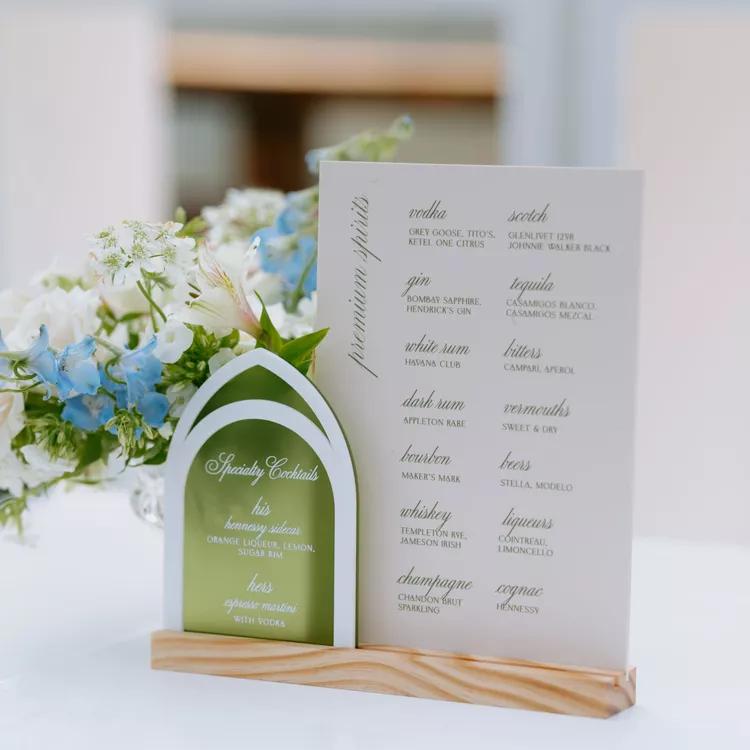
The most functional bar sign format includes:
A header such as “The Bar” or the couple’s last name followed by “Bar” (e.g., “The Anderson Bar”)
A list of available beverages organized by category: signature cocktails, wine, beer, non-alcoholic options
Signature cocktail names if the couple has created custom drinks for the event
Optional additions include a short phrase like “Drink Up” or a cocktail description for the signature drinks.
Keeping It Legible While Still Beautiful
Bar signs are frequently read from a conversational distance, which means the text needs to be legible while people are holding a drink and talking to someone else.
Calligraphy works beautifully for bar signs, but it must be executed with legibility in mind. Heavily flourished scripts or excessively compressed letterforms reduce readability and defeat the functional purpose of the sign.
The Menu: The Most Information-Dense Calligraphy Piece
Wedding menus present the greatest calligraphy challenge because they contain more text than any other sign, and all of it needs to be legible.
Menu Formats: Individual Cards vs. Table Menus
Individual menu cards at each place setting allow for elegant, per-guest stationery but require significant calligraphy volume at a cost commensurate with guest count.
For most couples, a single table menu displayed at each table, with one card serving all guests at that table, is a more practical and cost-effective format.
A third option is a large freestanding menu sign displayed in the reception space, which eliminates per-table production entirely but requires a surface large enough for all content to be clearly legible.
What to Include on Your Wedding Menu
A formal wedding menu typically includes:
Course header (Starter, Main, Dessert, or equivalents) Full dish name per course Brief description of key ingredients (important for allergy awareness) Any dietary notation system (V for vegetarian, GF for gluten free, etc.)
For cocktail receptions without a formal seated dinner, the menu might instead list canapé options, station descriptions, or the evening’s food format.
Bridging Menu Content with Calligraphy
The most effective menu calligraphy uses a hierarchy of scripts: a formal or decorative script for the header and course titles, and a clean, legible italic or print style for the longer descriptive text beneath each dish.
This visual hierarchy guides the reader’s eye naturally from the most decorative to the most informational, respecting both the aesthetic and the functional purpose of the piece.
Other Signs That Deserve a Place on Your Checklist
Beyond the three primary signs above, several additional calligraphy pieces are consistently recommended by experienced wedding planners for their practical and visual value.
Seating Chart Sign
The most complex piece in the signage category, addressed in full detail in the dedicated seating chart article above.
Table Numbers or Table Names
Individual table markers in a calligraphy style that matches the rest of the signage suite create visual consistency throughout the reception space.
Table numbers in calligraphy are a small investment with a high impact per piece because they appear in most dinner table photography.
Some couples replace numbered tables with named tables, using locations from their relationship history, favorite travel destinations, or meaningful words, which adds a personal storytelling layer to the seating experience.
Program Signs
A large calligraphed ceremony program sign posted at the ceremony entrance replaces individual printed programs and reduces waste while creating a more impactful visual element.
This format works well for outdoor ceremonies where printed programs might be affected by weather conditions.
“Please Sign the Guest Book” Signs
A small directional sign encouraging guests to sign the guest book at the reception is a practical necessity that most couples overlook until the last minute.
Pairing this with a calligraphed label or header on the guest book itself creates a complete station that invites engagement.
Thank You Cards and Day-After Details
While not technically a wedding day sign, calligraphed thank you cards produced as part of the same commission ensure a consistent aesthetic from the invitation through to the post-wedding follow-up.
The guide to wedding calligraphy trends for 2026 covers how couples are extending calligraphy across their entire wedding communication suite for a fully cohesive aesthetic.
How to Brief Your Calligrapher for the Full Signage Suite
The clearest and fastest path to a successful signage commission is a complete brief document that covers all of the following for each piece.
Sign type and display location. Exact wording, proofread and approved by both partners. Dimensions of the sign or surface. Preferred script style and ink color, with reference images where possible. Material type if the calligrapher is writing on a client-supplied surface. Delivery date or required completion date.
Providing this brief as a single organized document, rather than through fragmented messages over several weeks, typically reduces back-and-forth significantly and allows the artist to plan the full production schedule more accurately.
For reference, the detailed guide to budgeting for custom wedding stationery covers how to account for the full signage suite within an overall calligraphy budget.
Conclusion
Your wedding signage checklist is not just a practical planning tool. It is a design brief for the visual language of your entire celebration.
Every sign you commission in calligraphy is a decision to give guests an experience that is thoughtful, beautiful, and intentional, from the moment they arrive to the moment they leave.
Taking the time to plan each piece correctly, brief your calligrapher with complete information, and build in adequate production time ensures that every handwritten element delivers the impact it was created to deliver.
Get a full wedding signage calligraphy quote from Carla → Contact Carla Schall
FAQ
The welcome sign, escort cards or seating chart, and bar sign are the three highest-priority pieces. These are the most photographed and most guest-interactive calligraphy elements at a typical wedding reception.
A header, a list of available beverages by category, and the names of any signature cocktails. Optional additions include a short playful phrase and brief cocktail descriptions for the signature drinks.
The number depends on your wedding format and budget. A complete signage suite for a full reception typically includes: a welcome sign, seating chart, bar sign, table numbers, menus, and a program or order of events sign. Start with the highest-visibility pieces and add others as budget allows.
Yes, and maintaining the same script style, ink color, and material type across all pieces creates a cohesive visual identity that reads as more professionally curated than a mix of different styles.
For a complete signage suite including multiple large format pieces, brief your calligrapher at least six to eight weeks before your wedding date. Final wording approvals should be submitted four to six weeks before the event to allow adequate production and delivery time.