

Professional calligraphers are highly selective about their tools. After years of working across different surfaces, scripts, and contexts, they develop precise preferences for specific nibs, inks, papers, and accessories that beginner-oriented guides rarely capture.
This complete kit list for 2026 reflects the tools actually used by working professional calligraphers, including artists who do live event work, wedding stationery, brand activations, and fine art commissions. It is organized by category to help you understand not just what professional calligraphers use but why each tool earns its place in a professional kit.
Nibs
Nibs are the most important tools in any pointed pen calligrapher’s kit. Professionals typically maintain a collection of several types for different applications and style requirements.
For Copperplate and Formal Correspondence
The Leonardt Principal is one of the most respected copperplate nibs among working professionals. It offers consistent flexibility, clean hairlines, and durability that holds up through large batches of formal work. Many professional calligraphers who address hundreds of envelopes per week use this nib as their primary instrument.
The Gillott 303 is a finer, more delicate nib favored for Spencerian and delicate copperplate work where maximum hairline thinness is required. It has lower durability than the Leonardt Principal but produces exceptionally fine lines for refined work.
The Hunt 22B (crow quill) is used for extremely fine detail work, decorative line illustrations, and intricate flourishing. Its small size and round barrel require a different holder than standard nibs but reward the additional setup with unmatched fineness.
For Italic and Broad-Edged Scripts
Flat-edged nibs from Speedball, Brause, and William Mitchell cover most professional needs in italic, gothic, and foundational work. Professionals typically maintain a range of widths from 1mm to 4mm to accommodate different letter sizes and scale requirements.
The Brause Bandzug (also called the ornament nib) is used for specialty flourished work and large-scale decorative lettering. Its flat, wide edge creates commanding strokes that work beautifully for signage, large certificates, and architectural-scale lettering work.
Pen Holders
Oblique Holders for Pointed Pen
Professional calligraphers working primarily in copperplate and pointed pen scripts use oblique pen holders to maintain the correct letter slant angle without compensating with wrist rotation.
Quality oblique holders from makers like Akhil’s Oblique Pens, John Neal Bookseller, or custom craftspeople provide better nib placement and balance than mass-produced options. Professionals who work at volume invest in holders that fit their hand precisely.
Straight Holders
Straight holders are used for a wider range of nibs and scripts. Wood handles from Tachikawa, Speedball, or artisan makers offer comfortable grip and good weight balance for extended working sessions.
Many professionals maintain both oblique and straight holders and switch between them depending on the script and scale of the work.
Inks
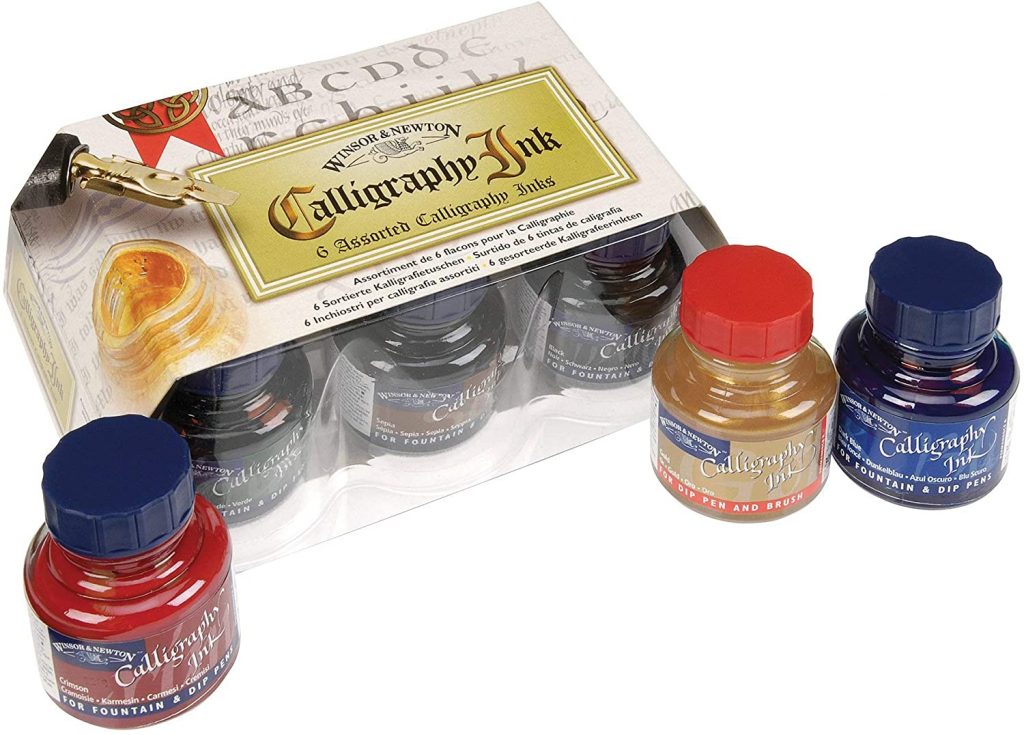
Ink selection is one of the most nuanced aspects of professional calligraphic practice. Professionals maintain multiple inks for different surfaces, colors, and applications.
Black Working Inks
Sumi ink is the default black ink for most professional pointed pen work. Its carbon-particle formulation dries to a deep, matte black that photographs exceptionally well. It flows smoothly, resists feathering on appropriate papers, and is permanent once dry.
Winsor and Newton Carbon Black ink is used when maximum opacity and absolute permanence are required, particularly on surfaces that will be handled extensively or exposed to environmental conditions.
Iron gall ink, historically the dominant writing ink for centuries, is experiencing a professional revival for its beautiful blue-black color that oxidizes to a rich dark tone over time. It is used for both aesthetic reasons and in historical reproduction work. Note that it is corrosive and requires more frequent nib cleaning than carbon inks.
Specialty and Metallic Inks
Gold and silver metallics are essential in professional event calligraphy. Dr. Ph. Martin’s Iridescent Copperplate Gold is a widely used professional option for warm gold work. Finetec Inka Gold in pan form provides exceptional opacity and luster for premium applications.
White ink for dark paper work is a professional necessity. Dr. Ph. Martin’s Bleed Proof White is a standard professional choice, though its thick consistency typically requires dilution for smooth nib flow.
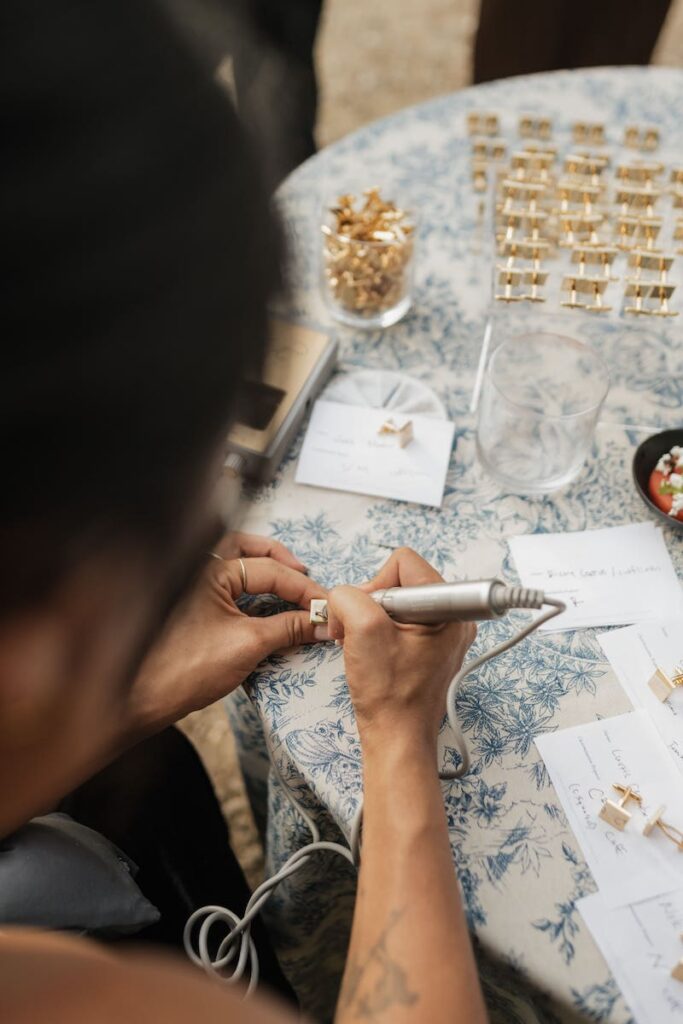
Professional calligraphers who do live engraving events and brand activations maintain a more specialized range of marking tools suited to glass, metal, and other non-paper surfaces. How professional calligraphers use specialist inks for live engraving and event work covers the application-specific choices in detail.
Paper and Writing Surfaces
Practice and Studio Paper
Rhodia Dot Pads (No. 16 and No. 19) are industry-standard professional practice surfaces. The slightly cream-tinted, ultra-smooth paper handles fine nib calligraphy without feathering, and the dot grid provides subtle guidance without the visual noise of printed lines.
Clairefontaine Triomphe paper is the preferred writing surface for finished correspondence and formal practice work among many European calligraphers. Its extremely smooth, opaque white surface produces crisp hairlines and bold downstrokes.
Invitation and Stationery Paper
Professional calligraphers working on wedding stationery and formal commissions source their paper from specialty stationery suppliers. Crane and Company, Arches Text Wove, and Fabriano Unica are common choices for high-end invitation and correspondence work.
For colored envelope stocks, A7 Envelopes by Paper and More and premium envelope lines from French Paper and Neenah provide consistent, calligraphy-compatible surfaces.
Non-Paper Surfaces
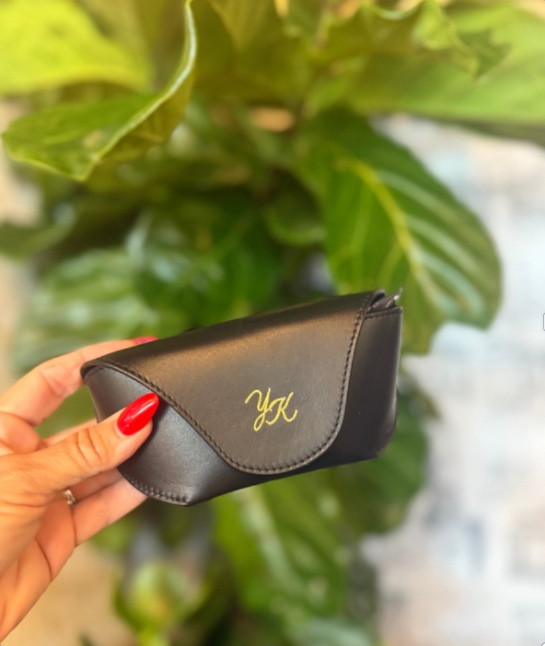
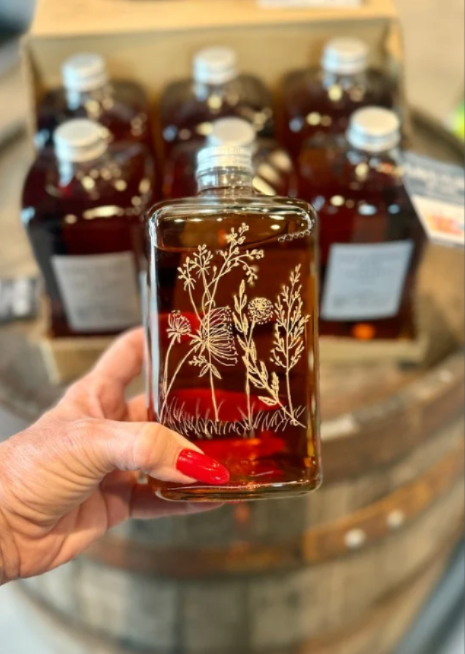
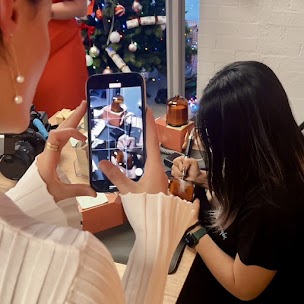
Professional live event calligraphers regularly work on glass, mirrors, leather, wood, and metal. Each surface requires specific ink or paint formulations and nib alternatives or brushes. Understanding which inks work on which surfaces is essential knowledge for any professional working in live event contexts.
Lighting and Workspace Setup
Light Sources
Professional calligraphers working on detailed pointed pen work typically use a directional desk lamp positioned to eliminate shadows under the nib. The most preferred configuration is a lamp positioned to the upper left for right-handed calligraphers, casting consistent light across the writing surface without glare.
OttLite and Daylight brand lamps are widely used in professional studios for their daylight-spectrum bulbs, which render ink colors accurately and reduce eye strain during extended working sessions.
Light Boxes
A light box is an essential professional tool for layout work, tracing, and ensuring consistent positioning of multi-element compositions. Artograph Lightpad and Huion LED light pads are popular professional choices at accessible price points.
Light boxes are used for transferring pencil sketches to final paper, checking layout before inking, and ensuring that ruled guideline sheets show through the final writing paper during formal commissions.
Auxiliary Tools
Gum Sandarac
Gum sandarac is a resin powder that professionals dust onto paper before writing to reduce feathering and improve ink adhesion on surfaces that are not calligraphy-specific. It is particularly useful when working on stationery paper that was not selected with calligraphy in mind.
Burnisher
A bone burnisher is used to flatten paper fibers that may have been disturbed during erasing, particularly after removing pencil guidelines from final work. Professionals run the burnisher over erased areas before beginning ink work to restore a smooth writing surface.
Ruling Pen and Mechanical Ruling Tools
A ruling pen allows professionals to draw precise lines in ink without a nib, useful for borders, decorative frames, and structural elements in formal composition work.
Nib Cleaning Tools
Professionals clean nibs regularly during working sessions. A small jar of water, lint-free cloth strips, and a nib cleaning brush allow quick between-stroke cleaning that maintains consistent ink flow and extends nib life.
The Professional Digital Extension
Contemporary professional calligraphers increasingly integrate digital tools alongside traditional equipment. An iPad Pro with Apple Pencil and applications like Procreate or Adobe Fresco is used for digital lettering mockups, client layout presentations, and the creation of digital calligraphic files for print production.
Crucially, most professionals maintain a clear distinction between hand-executed calligraphy and digital lettering, never presenting one as the other. The distinction between calligraphy fonts and hand lettering is one that clients increasingly appreciate and prioritize in premium commissions.
Building Toward a Professional Kit
You do not need a professional kit to start learning calligraphy. But understanding what professionals use and why gives you a clear trajectory for tool acquisition as your skills develop.
Start with the beginner essentials. Add specialist tools as your skills and project requirements demand them. Every item in a professional’s kit earned its place through a specific need, not through aspirational purchasing.
Understanding the complete cost breakdown of different calligraphy tools at different experience levels helps you plan your tool investments intelligently rather than speculatively.
FAQ
Most professionals maintain 5 to 15 different nib types for different scripts, scales, and applications. For day-to-day formal work, two or three primary nibs cover most needs. Specialty nibs are added for specific client requirements.
For formal pointed pen work, yes. For broad-edged scripts, fountain pens are increasingly used in professional contexts where consistent ink flow is prioritized over the slight aesthetic advantage of a dip nib. Live event work and non-paper surfaces may require entirely different marking tools.
A complete professional kit covering pointed pen, broad-edged work, specialty inks, and lighting typically costs between $300 and $800 USD depending on brand choices and the range of nibs maintained. Entry into professional-quality work is possible for significantly less by starting with the most critical tools.
Both. Pre-made guideline sheets are used for standard-sized work. For custom commissions with non-standard dimensions or specific proportion requirements, professionals rule their own guidelines to specification.
Most professionals identify ink quality as the single most impactful upgrade. Moving from beginner-grade to professional-grade sumi ink or iron gall ink produces an immediately visible improvement in line quality, depth, and consistency.
See how a professional works from the inside, and book a live calligraphy event with Carla Schall to experience professional tools and technique in a real working context. Connect at carlaschall.com