

The relationship between calligraphy fonts and hand-lettering is one of the most practically important questions in modern design, branding, and wedding stationery planning. The visual difference between a quality calligraphy font and genuinely hand-lettered work is not always obvious to untrained eyes, but the implications of choosing one over the other extend well beyond aesthetics.
This guide draws a clear line between calligraphy fonts and authentic hand-lettering, addresses when and why you might legitimately use each, and explains why the distinction matters particularly in contexts where authenticity, luxury positioning, and personal connection are at stake.
What Are Calligraphy Fonts?
Calligraphy fonts are digital typefaces designed to visually mimic the appearance of hand-written calligraphic scripts. They are built from individual letterform drawings (created by a type designer) that are programmed into a font file and rendered automatically by software.
The market for calligraphy-style fonts is enormous and highly developed. Platforms like Google Fonts, Adobe Fonts, and Creative Market offer thousands of calligraphy-inspired typefaces ranging from free hobby use to licensed commercial fonts designed by professional type designers.
Quality calligraphy fonts include features like OpenType contextual alternates, which substitute different versions of the same letter based on surrounding characters to simulate the natural variation of genuine handwriting. High-end calligraphy typefaces from foundries like Sudtipos or Mark Simonson Studio are genuinely sophisticated typographic achievements.
What Calligraphy Fonts Cannot Do
Despite their sophistication, calligraphy fonts have inherent limitations that no amount of typographic programming can fully overcome.
They are rendered identically at any scale, without the natural variation in stroke weight, ink behavior, and letterform spontaneity that characterizes genuine handwriting. Repeated characters are identical unless the font includes extensive glyph variations. The spatial relationships between letters are governed by programmed kerning pairs rather than the organic, context-sensitive spacing decisions of a human writer.
Most importantly, calligraphy fonts lack the physical presence of real ink on real paper. They can be printed, and high-quality printing is often beautiful. But the tactile quality of true calligraphy, the slight relief of dried ink, the subtle color variation within a single stroke, the microscopic evidence of a hand at work, cannot be replicated digitally.
What Is Hand-Lettering?
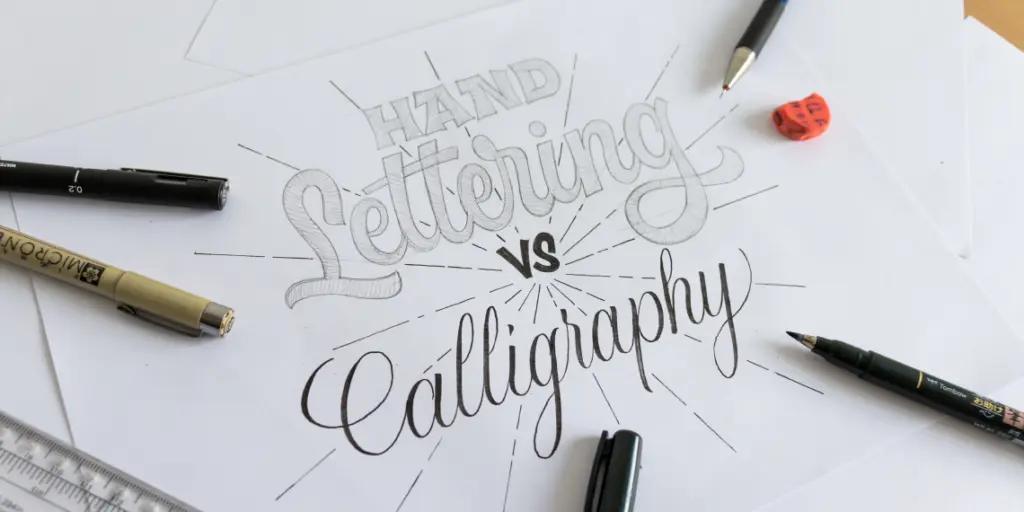
Hand-lettering is the art of drawing individual letterforms by hand for a specific use or composition. Unlike calligraphy, which writes letters using defined scribal techniques and consistent stroke sequences, hand-lettering designs each letter as a graphic element within a composition.
Hand-lettering artists plan their compositions, sketch letterforms in pencil, refine them through multiple iterations, and ink final versions manually. The process is closer to illustration than to writing.
Well-known applications of hand-lettering include logotype design, editorial illustration, album artwork, packaging, and custom signage. Hand-lettering and calligraphy overlap significantly in visual appearance but differ meaningfully in process and intent.
How Calligraphy and Hand-Lettering Differ
Calligraphy follows defined scribal rules and writes letters in a continuous flow with specific stroke sequences. Hand-lettering draws letters with design freedom and typically involves planning, sketching, and revision rather than the continuous writing of calligraphy.
The difference between calligraphy and brush lettering extends this conversation to include the brush-based practices that bridge the gap between the two disciplines.
Can You Use Both in the Same Project?
Yes, and this combination is common in professional design and event stationery. The key is using each for the role it is genuinely suited for.
When Fonts Are Appropriate
Calligraphy fonts are entirely appropriate for body text in wedding stationery, supporting copy in brand materials, website display text, and any application where large volumes of text need to be set consistently at multiple sizes and weights.
Using a calligraphy font for your RSVP card body text while commissioning handwritten calligraphy for the couple’s names, envelope addressing, and seating charts is a legitimate, cost-effective approach that reserves the premium of genuine hand-lettering for the highest-impact touchpoints.
This hybrid model is widely used by professional designers and wedding stationery studios. It is transparent, practical, and aesthetically effective when the proportions and style choices align well.
When Authentic Hand-Lettering Is Non-Negotiable
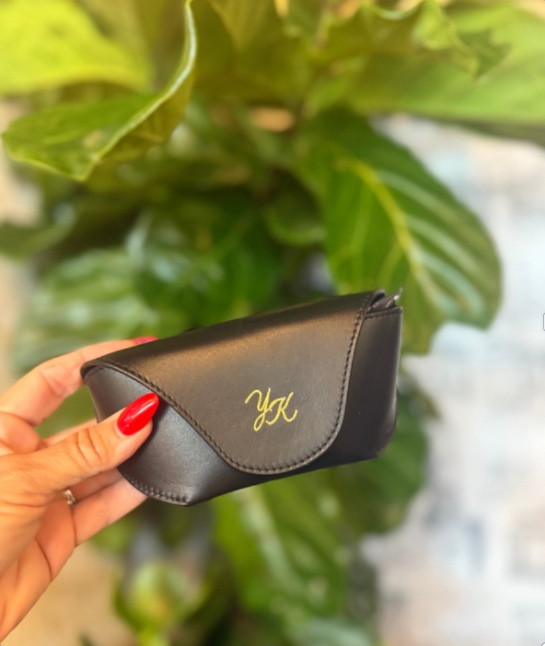
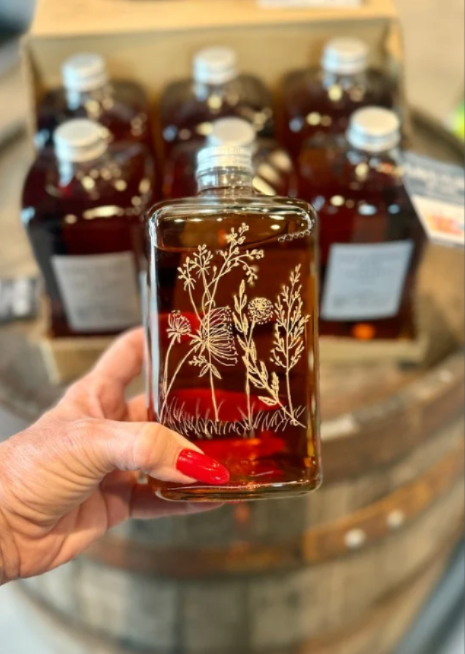
In luxury positioning, authentic hand-lettering is not interchangeable with fonts. Luxury brands and high-end events invest in genuine calligraphy precisely because the human origin of the work communicates values that digital reproduction cannot.
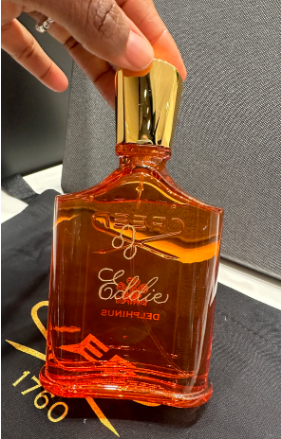
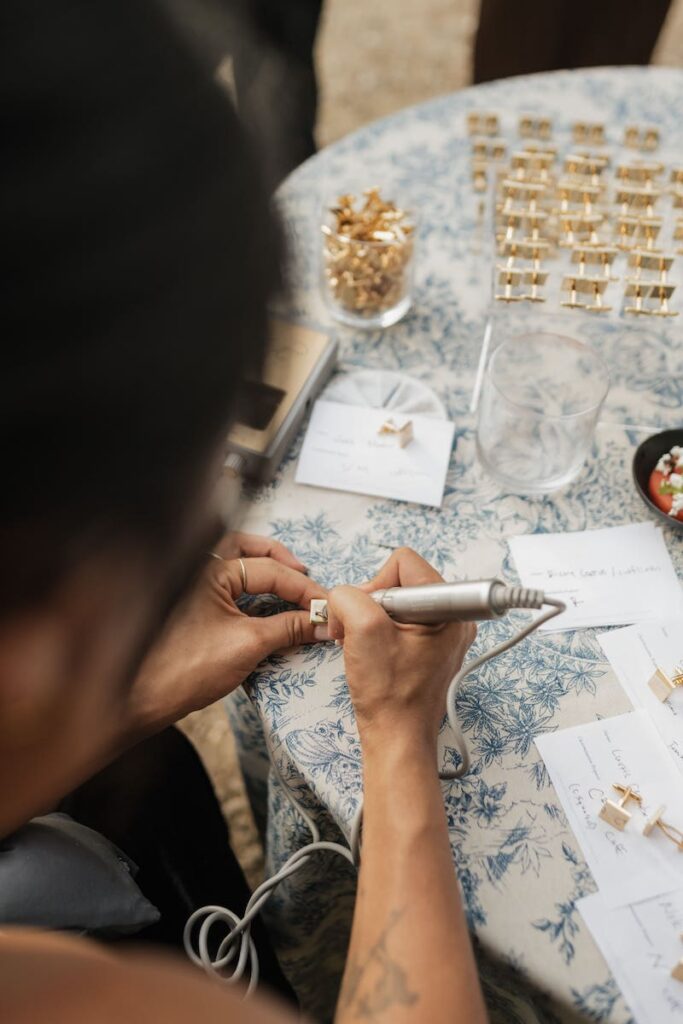
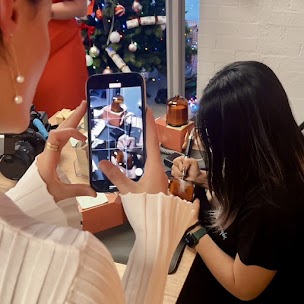
The handwritten comeback in a digital world is fundamentally about the re-assertion of human craft in contexts saturated by automated production. A luxury perfume brand commissioning live calligraphy at a retail activation event does so because a font on a screen is the exact opposite of the experience they are creating.
Similarly, wedding guests who receive a hand-addressed envelope experience something qualitatively different from an identical-looking address printed from a calligraphy font. The knowledge of human intention changes the emotional register of the object itself.
The Legal and Ethical Dimensions
Font Licensing
Most calligraphy fonts are not free for commercial use without a commercial license. Before using any calligraphy font in client work, printed materials, merchandise, or any commercial context, verify that your license explicitly covers your intended use.
Free fonts from Google Fonts and similar platforms are licensed under open-source or similar terms that generally allow commercial use, but always verify the specific license. Fonts from commercial platforms like Creative Market require license purchase before commercial use.
Using a font beyond its licensed scope exposes you (or your client) to intellectual property liability. This is a practical concern worth addressing before finalizing any design project.
Representing Font-Based Work as Calligraphy
Presenting font-generated lettering as handwritten calligraphy, whether explicitly or through implication, is ethically problematic and potentially legally problematic in commercial contexts. Clients who are paying for calligraphy services are entitled to genuine hand-lettered work unless an alternative is agreed upon in writing.
The issue of misrepresentation is particularly relevant in the wedding and luxury markets, where clients pay significant premiums specifically because they want authentic human craft. Being transparent about the distinction between font use and commissioned calligraphy is an ethical baseline for any design professional or calligrapher.
Quality Comparison: What the Research Shows
The human eye is surprisingly good at detecting the difference between genuine hand-lettering and digital simulation, even when viewers cannot articulate what they are seeing.
Research on authenticity perception in branding and design consistently finds that consumers assign higher value, greater emotional resonance, and stronger trust signals to objects and communications they perceive as genuinely hand-made rather than digitally produced. The impact of personalization on guest experience extends this principle directly into event and hospitality contexts.
This does not make calligraphy fonts inferior as design tools. It means they serve different purposes and produce different emotional outcomes. Understanding this difference is what allows you to deploy each tool appropriately.
Practical Applications: Font vs Hand-Lettering Decision Guide
For Wedding Stationery
Use hand calligraphy for: couple’s names on invitations, envelope addressing (outer and inner), place cards, seating charts, escort cards, and menu headers.
Use fonts for: body copy on invitations, RSVP card text, rehearsal dinner details, and any text element where large quantities or small sizes make hand-lettering impractical.
For Brand and Commercial Design
Use hand calligraphy for: logotype elements, brand activation live events, bespoke packaging for limited editions, and any touchpoint where human authenticity is a deliberate brand value.
Use fonts for: website typography, social media templates, marketing copy, and any application requiring consistent reproduction across multiple formats.
For Personal and Gift Projects
Use hand-lettering for: personalized cards, meaningful gift inscriptions, special occasion pieces, and anything where the recipient will know and value that a human wrote it specifically for them.
Use fonts for: printed backgrounds, supporting text elements, and any volume production that would make full hand-lettering impractical.
Commissioning Authentic Calligraphy: What to Expect
If you decide that a project genuinely requires real hand-lettering rather than a font, commissioning an experienced professional calligrapher is the appropriate path.
Professional calligraphers like Carla Schall produce work that is categorically different from font-generated lettering in ways that clients consistently describe as immediately visible and emotionally impactful. The investment in professional calligraphy reflects years of technical training, specialized tools, and the irreplaceable human presence in every letterform.
Understanding what commissioning custom calligraphy involves and what factors affect pricing helps clients approach the process with informed expectations and better outcomes.
The minimum order structures and pricing frameworks for different types of commissions are covered in detail on corporate and minimum order calligraphy guidance, which applies equally to wedding and personal project inquiries.
Calligraphy Fonts vs Hand-Lettering: The Bottom Line
Both have genuine value. Neither is categorically superior. The choice between them should be determined by the purpose of the project, the budget available, the audience’s expectations, and the emotional register you are trying to create.
Use fonts strategically for high-volume, small-scale, or supporting-text applications where consistency and efficiency are the primary values. Commission authentic hand-lettering for the high-impact touchpoints where the human presence in the craft is itself the message.
The distinction between calligraphy fonts and hand-lettering is ultimately a distinction between efficiency and authenticity, and the best design decisions consciously choose which value serves the specific context rather than defaulting to one as a universal solution.
FAQ
The relationship is complex. Fonts are designed artifacts protected by copyright in most jurisdictions. If a font is created by digitizing a specific living calligrapher’s handwriting without permission, there are legitimate ethical and potentially legal concerns. Most commercial calligraphy fonts are original type designs rather than copies of specific individuals’ work.
Tracing a font to produce “hand-lettered” work for client presentation is ethically problematic and should be disclosed. If a client commissions hand-lettering and receives traced font work, that represents a misrepresentation of the service provided.
Among the most widely used professional choices are “Great Vibes,” “Cormorant Garamond,” “Allura,” and “Sacramento” for elegant script styles. For formal copperplate-inspired fonts, “Pinyon Script” and “Alex Brush” are popular. All of these are available through Google Fonts under open-source licensing.
Commissioned calligraphy costs vary significantly by project scope and artist. For wedding envelope addressing, professional rates typically range from $2 to $8 USD per envelope. A complete invitation suite commission can range from $300 to several thousand dollars depending on quantity and complexity. Fonts cost nothing to zero-to-low monthly subscription fees.
Yes, and this hybrid approach is common in professional design. The key is to ensure the styles are visually harmonious and that the distinction between font and handwritten elements serves the design intentionally rather than appearing accidental or mismatched.
Commission truly hand-lettered calligraphy from Carla Schall, not fonts, not simulations, but genuine artistry created specifically for your event, brand, or celebration. Start your commission at carlaschall.com